(Editor’s note – this was originally planned to be shipped right after New Year, but CanCon got in the way, and I don’t want to rewrite it. So just pretend it came out at the start of the month, as opposed to the end of it. Or don’t.)
“What is a man – a miserable pile of secrets!”
Happy new year, dear readers, and welcome back to our shared hellscape.
If you needed a reminder (tough luck if you don’t, I need to pad wordcount) I reviewed a video game title which became a cultural island in our collective stream of consciousness for a decade – Need for Speed: Underground – NFSU for short.
EA clearly loves gambling, because immediately after NFSU hit shelves, the overworked developers at EA Black Box (fuck crunch, by the way) were put to work by their corporate overlords to deliver a sequel to their original, wildly successful neon-lit fever dream.
Thus, out of the ass of the overworked and underappreciated dev team at EA Black Box came Need for Speed Underground 2 – and it was clear the fever dream would last a little while longer.
However, before going further, a little bit of inside baseball about my “review” process.
I subscribe to the “sequel theorem” devised by prolific games journalist Ben “Yahtzee” Croshaw. Put simply, a good sequel takes the framework of the original and innovates further - and a bad sequel is simply the same game with bigger numbers and a new coat of paint.
To put this in real world terms:
- XCOM 2 (and Chimera Squad) are good sequels.
- Call of Duty (pick one) is a series of bad sequels.
With that in mind, what do I think of Underground 2?
Initially I thought it was an ok sequel – more of the same, featuring an open world. However, as I played through NFSU2 it became clear that it had built upon the original in several ways – some small, and some not so small.
Don’t get me wrong, it is still an arcade racing game, so it’s not totally reasonable to demand almost an entirely new game within the framework of the original. I do think the changes and additions, whilst individually minor, collectively represent a not-insignificant innovation upon the original’s “underground street racing game” framework.
But to a certain extent, it is more of the same.
So, what’s new in Bayview? Well, there’s a new race format – Street X, which is a second way to use the game’s drift tracks – and the game’s primary game mode has been put in a sandbox.
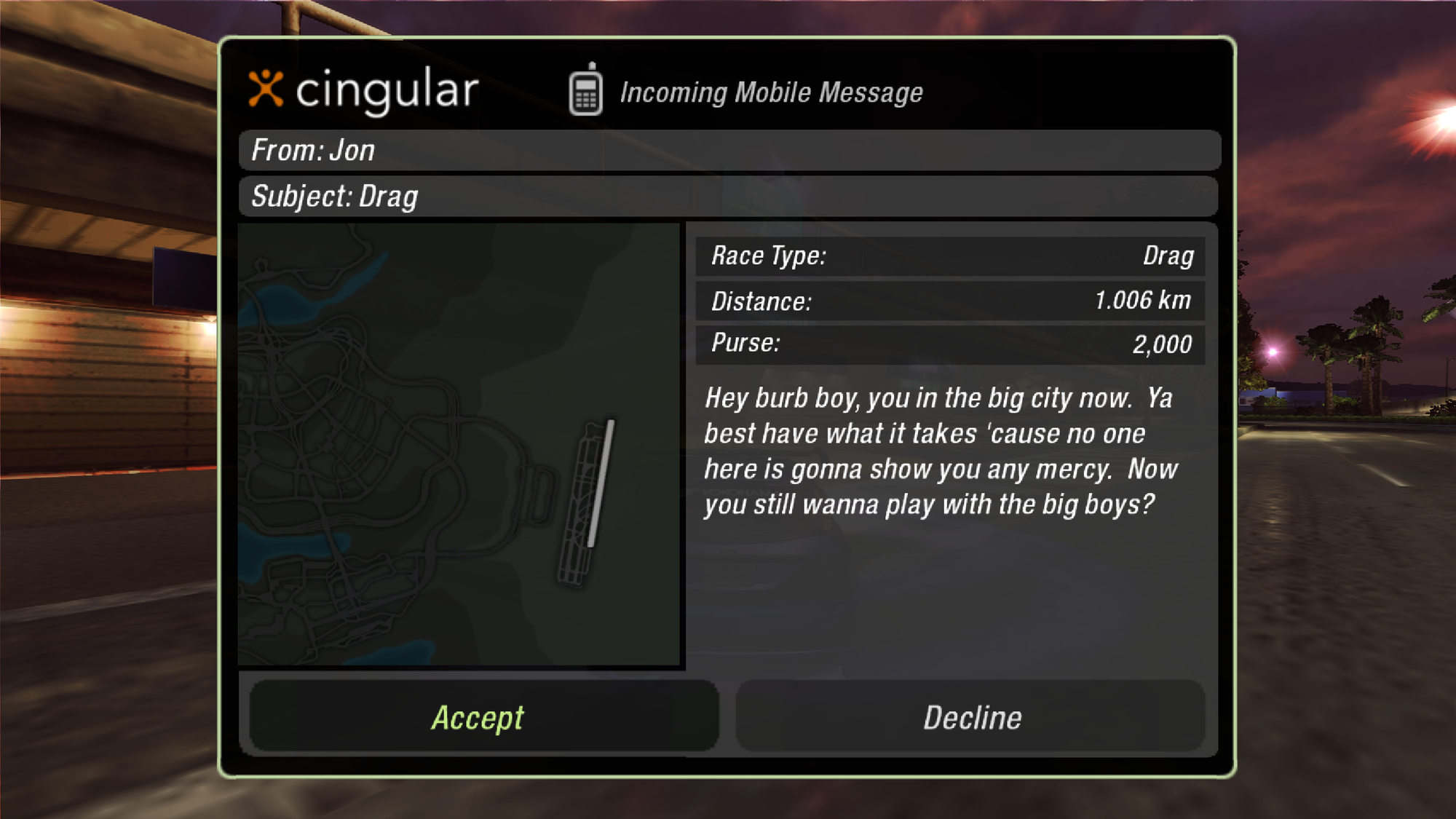
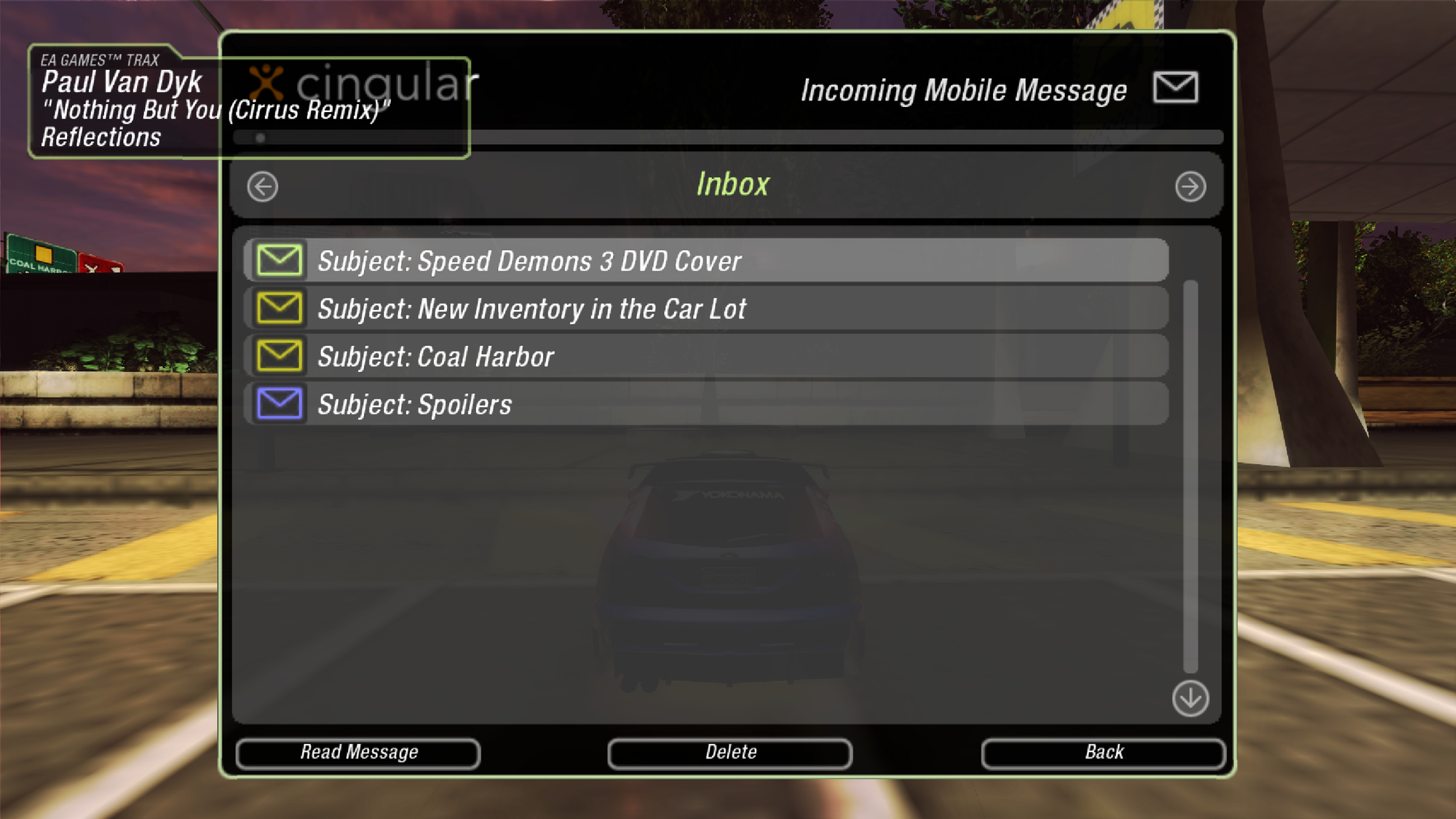
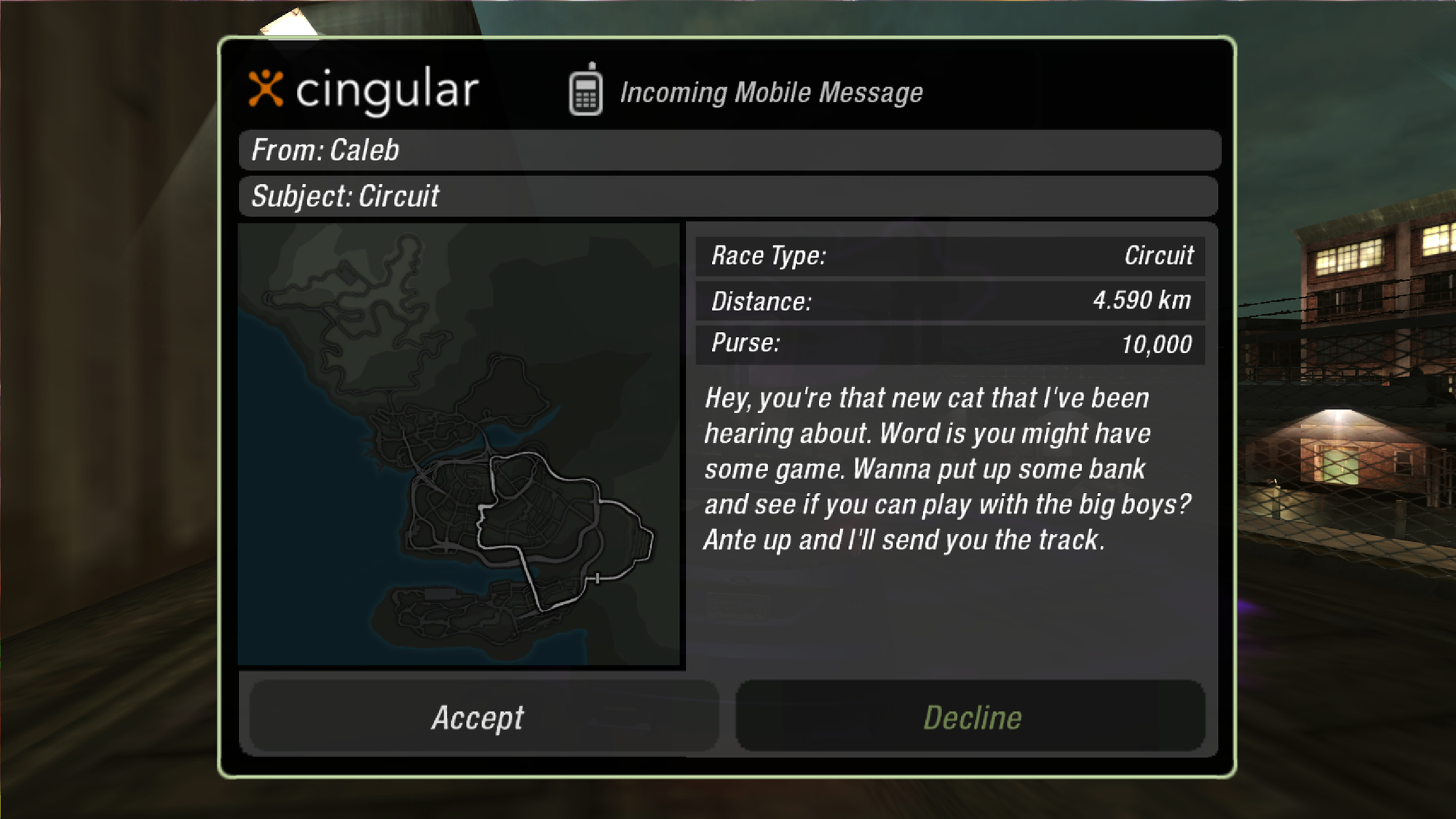
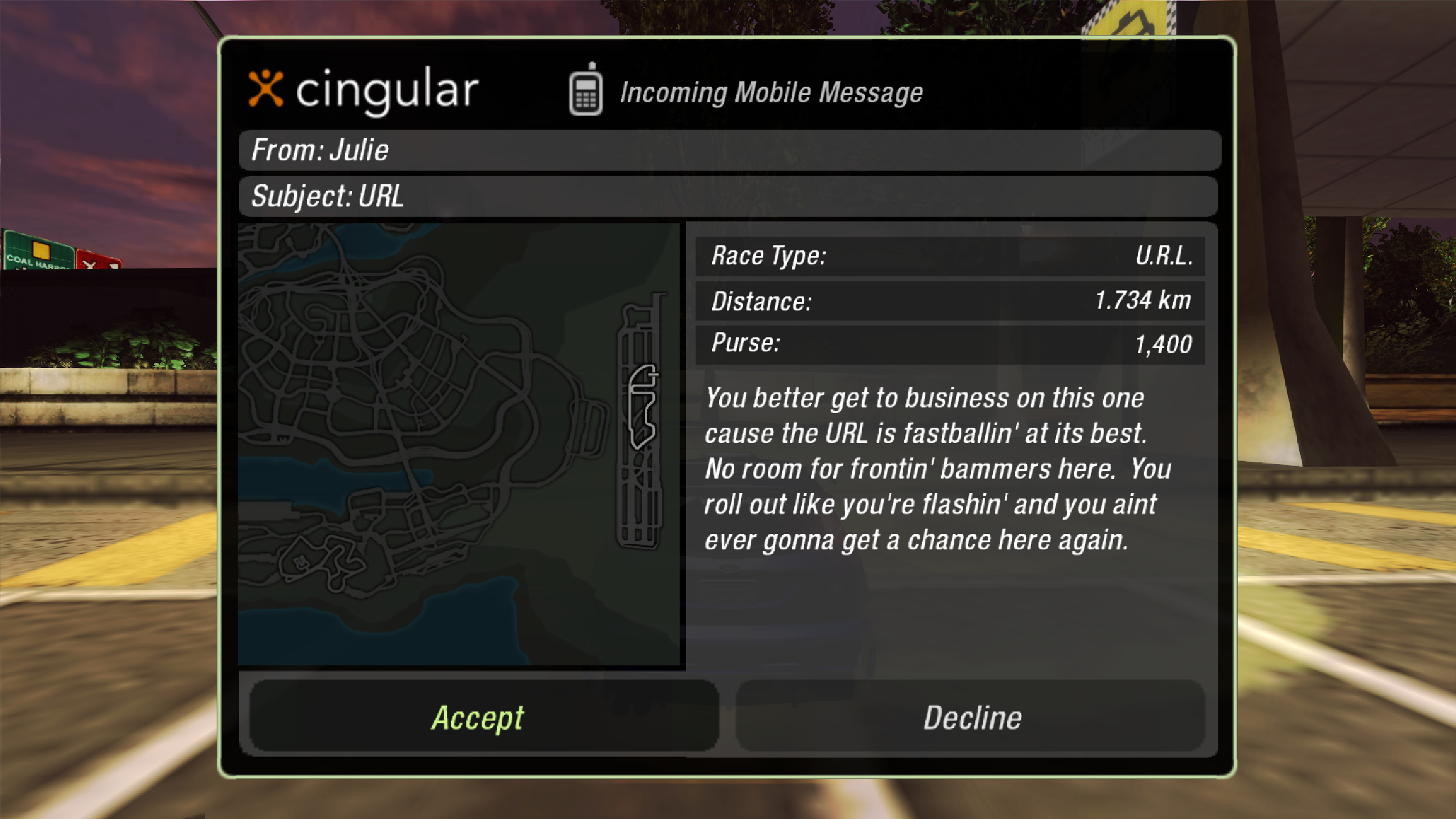
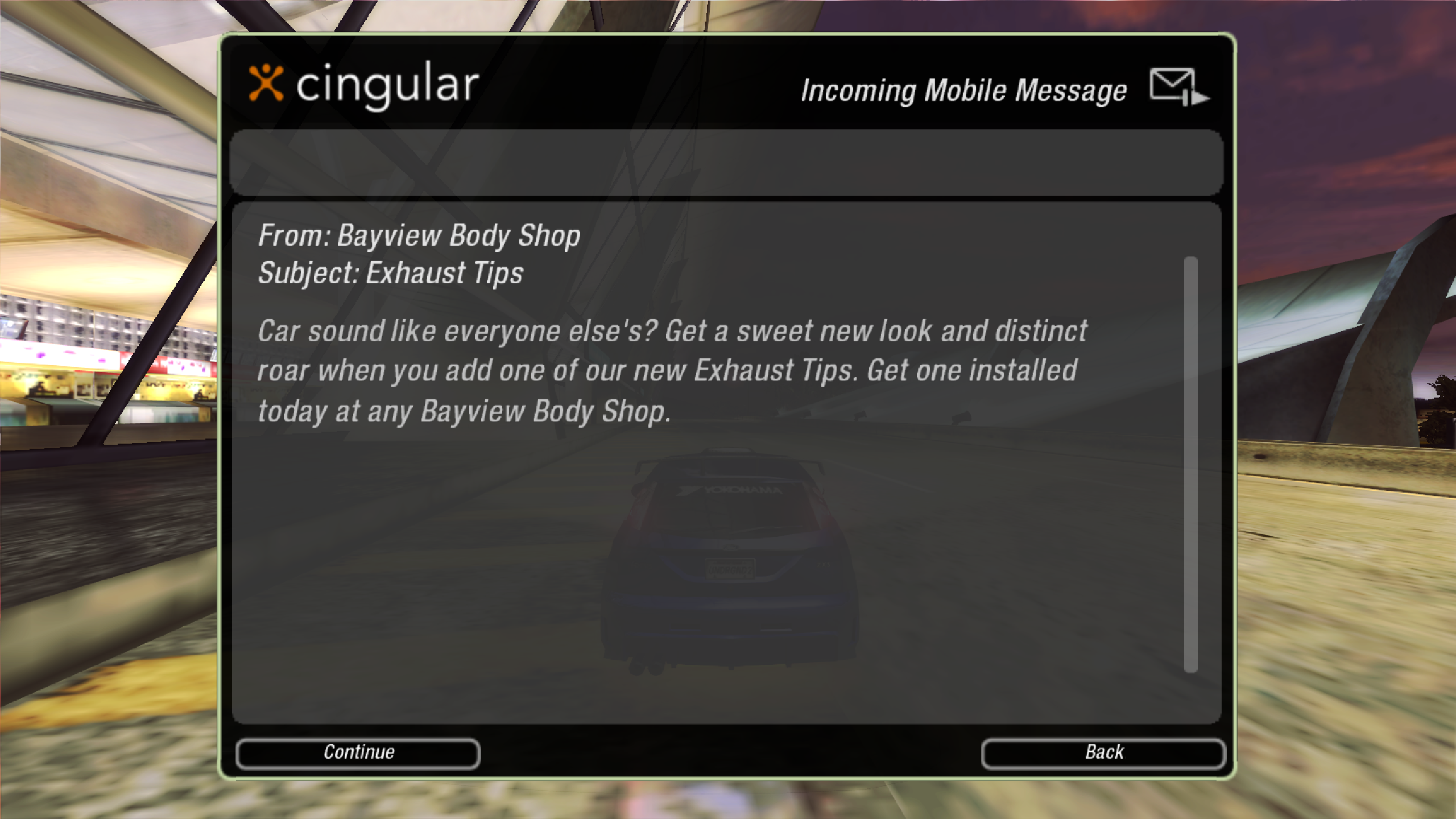
You also have a brand-spanking new Cingular text messaging system (what a world) - which features a questionable simulacrum of what a game developer thought the youth sounded like in 2004:
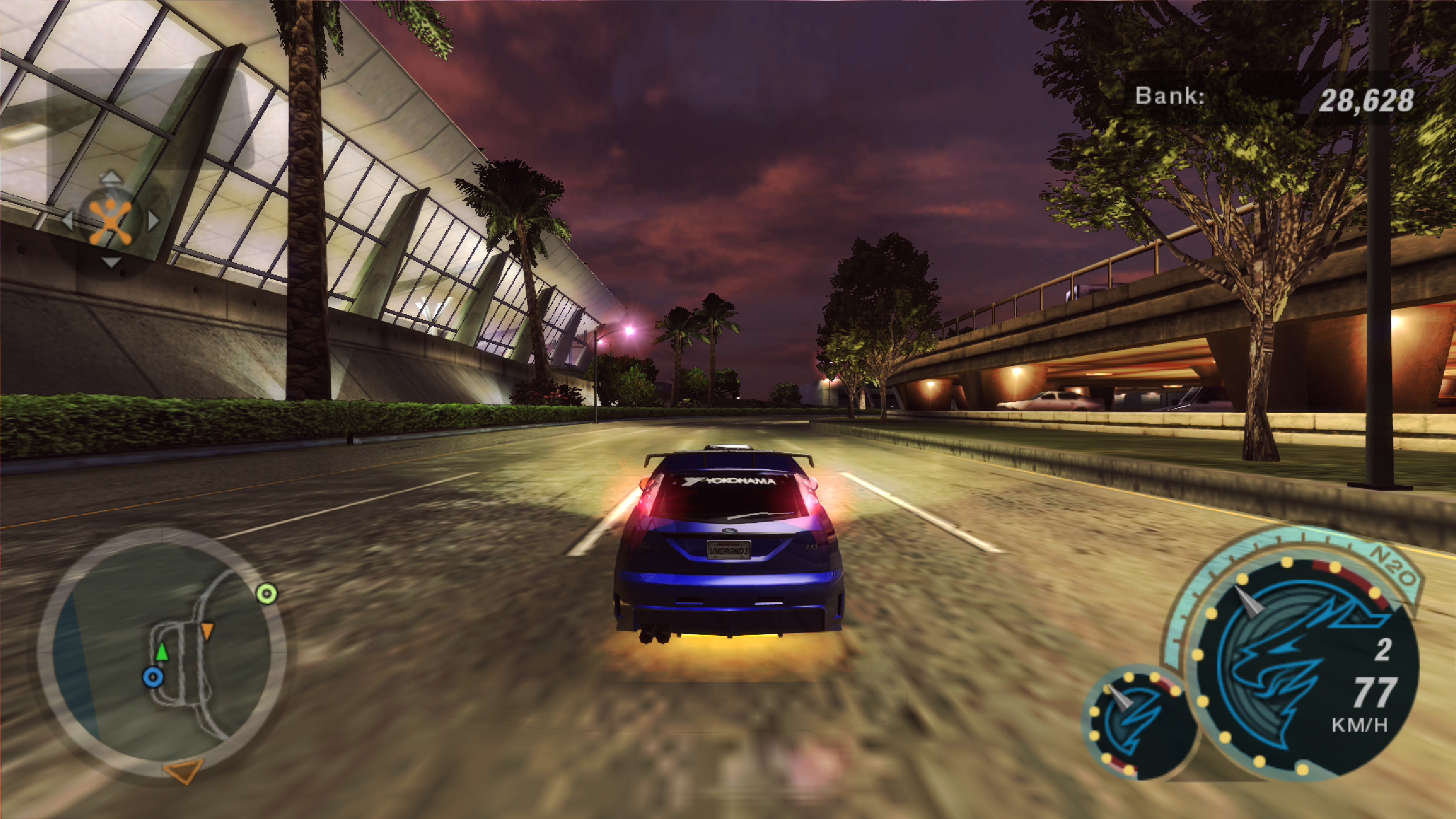
This means that the game has moved away from having you move from race, to menu, to race and back again. Instead, there’s a living, breathing city to traverse with other AI racers to challenge (more on that later) and a legion of unmarked, plain white vans to plough into on your way to the next event.
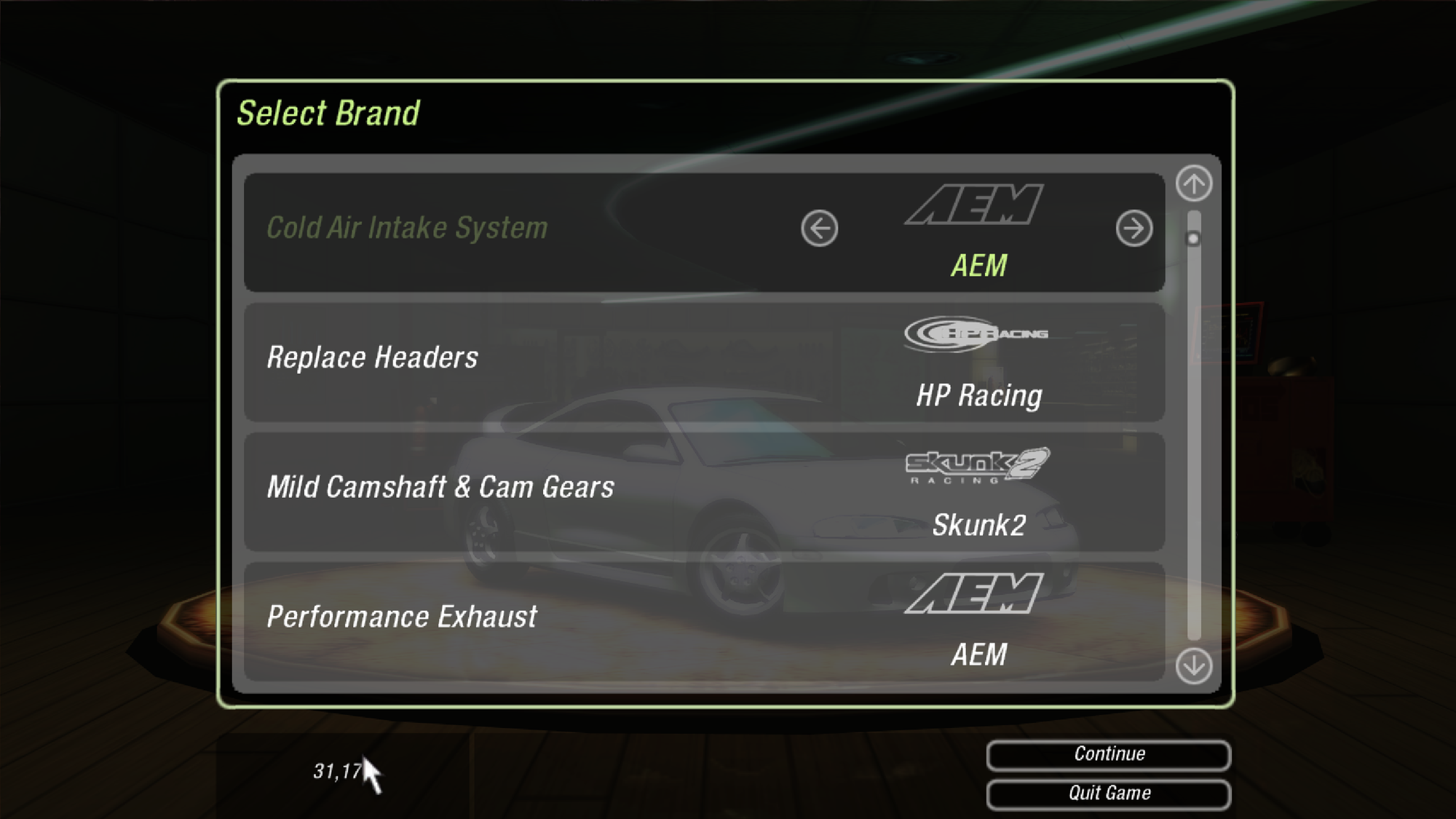
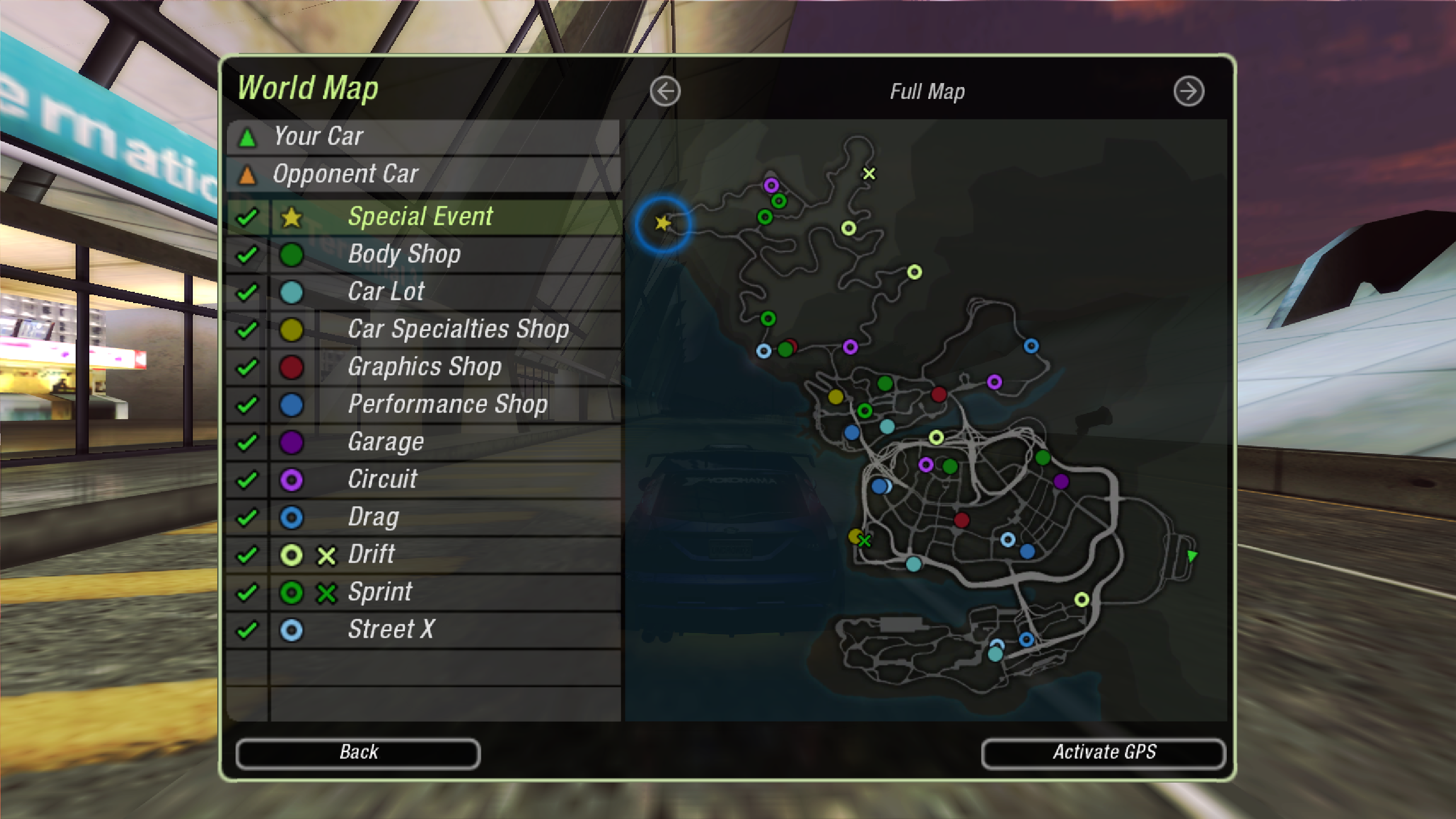
Underground 2’s sandbox is my favourite part of the game, and it’s not hard to explain why. For a start, it feels the right size. You never feel things are too far away, even when travelling from all the way in the north through the Jackson Heights, to the Coal Harbour in the south of the city. Events are tightly clustered together so you’re never far away from your next race, and, in perhaps one of my favourite mechanics, the shops for customising your vehicle are hidden around the city.
Even better, finding a new shop gives you some sweet unlocks for your trouble, incentivising you to go and hunt for new shops every time you unlock a new part of the city – and the hit of dopamine you get upon finding a new shop and unlocking more components for your trouble makes Underground 2 stick in my mind – even a month after playing it.
It feels very backward to make this comparison, but the design of Bayview feels like something you might find in a Yakuza game – tight, focused, interesting, but still rewarding exploration.
In general, I find open worlds and the publishers that make them (hi, Ubisoft) exhausting after a while – they’re too big, there’s too much, and it kills my interest in a game (see: Ghost Recon Breakpoint) – but I don’t find that with Underground 2.
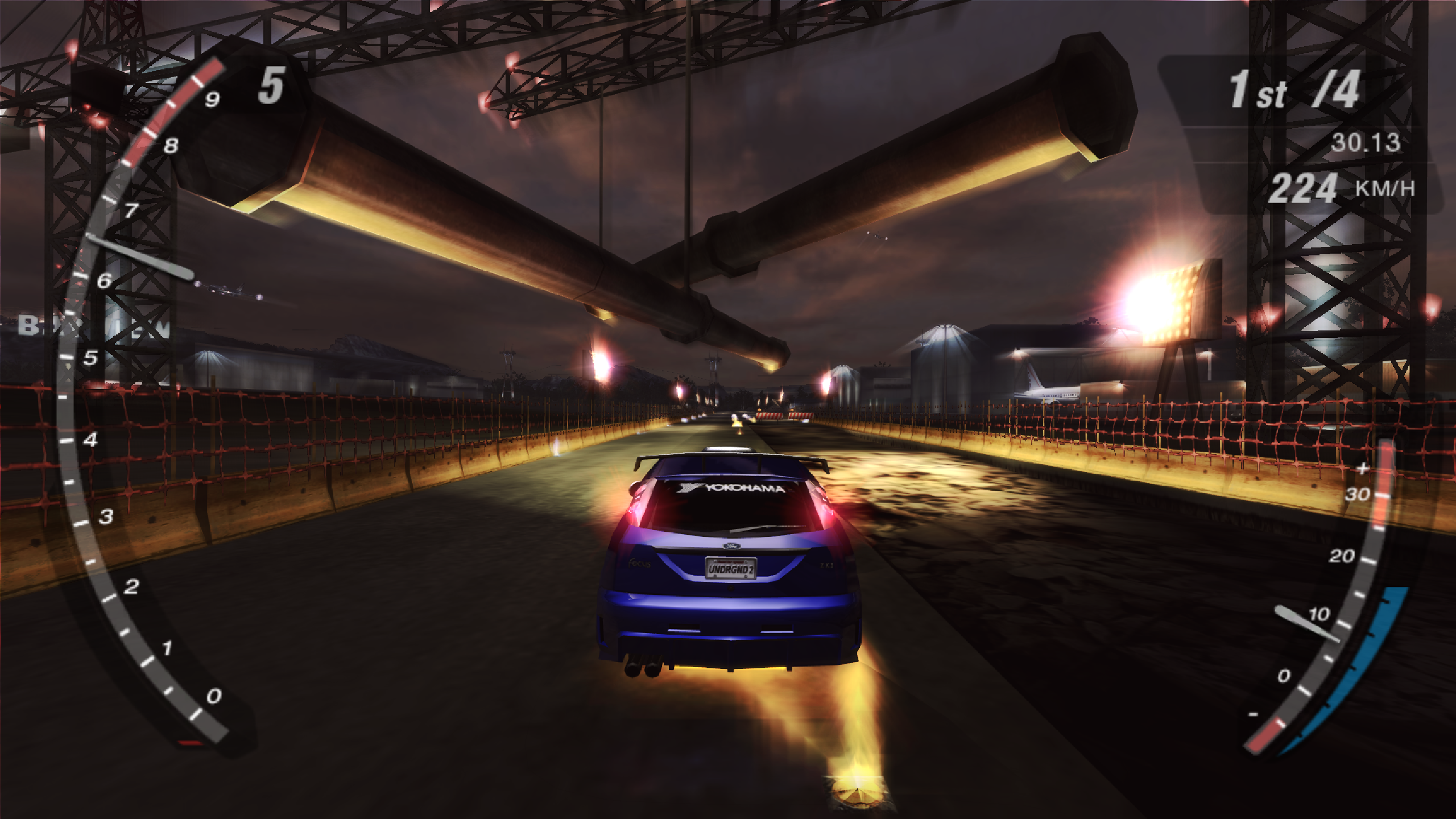
But because the world isn’t too big, and still has hidden nooks and crannies to find, you enjoy driving from end to end, and soaking up the atmosphere of a city where the normies have gone to bed, and the psychotic street racers run the joint.
It’s not just the mechanics of the open world, either. Just like the first game the same great contrast in the game’s visuals – the skybox’s blacks, dark blues and purples – and the bright oranges, yellows and greys of the street, capture a feeling of racing when the clock has struck midnight. And combining the sandbox nature of Underground 2 and this neon vibe makes the experience incredibly immersive.
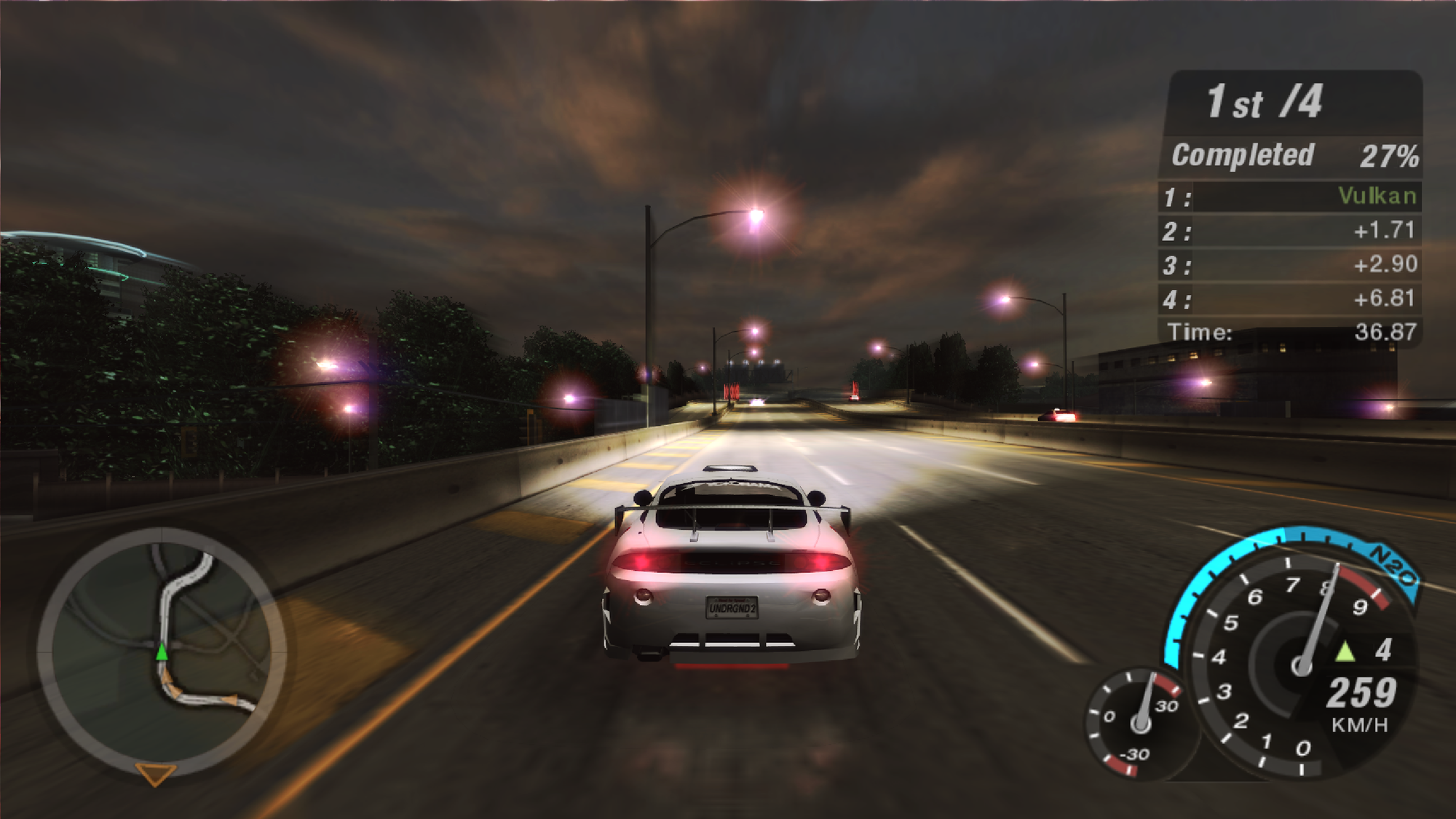
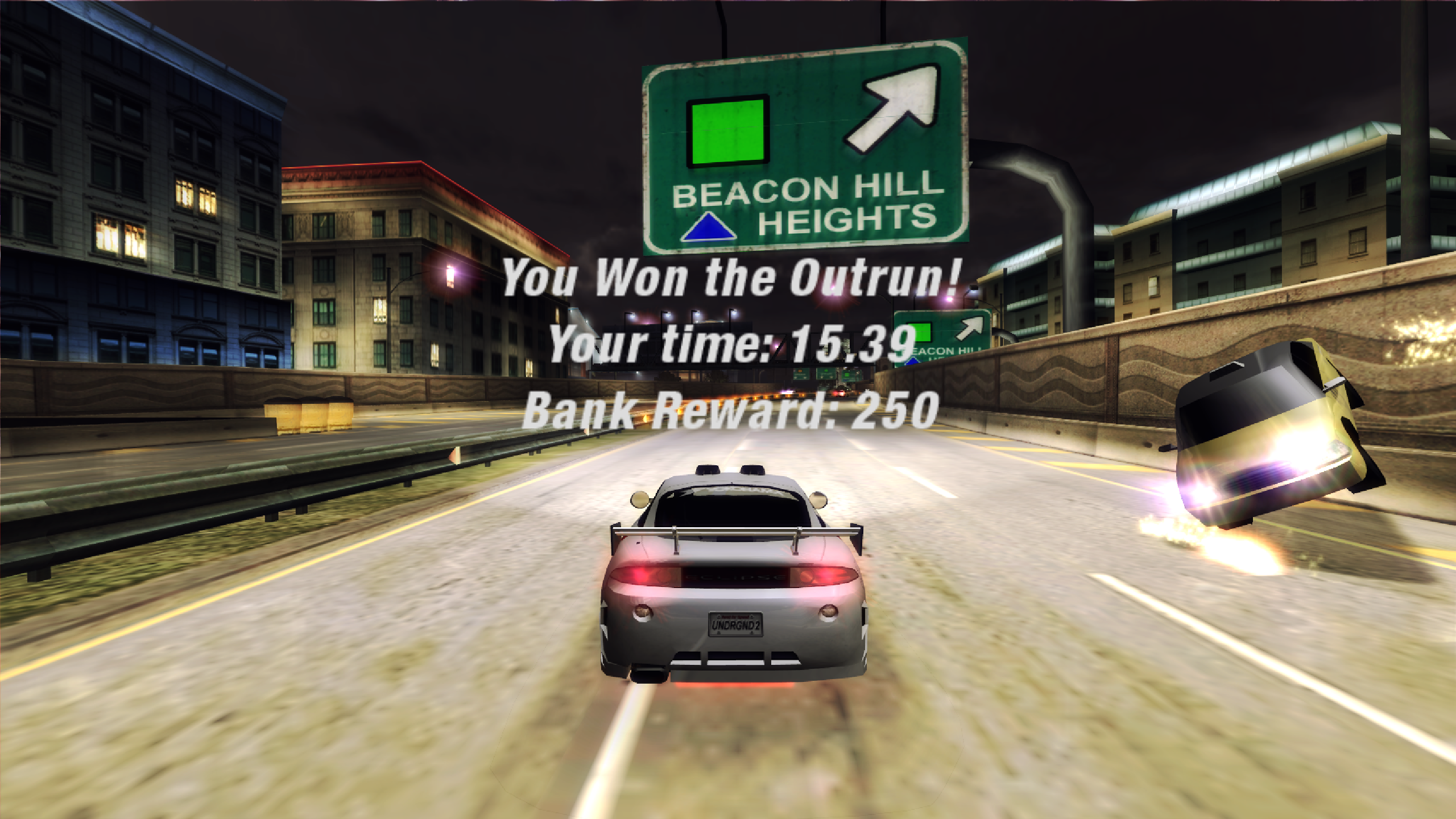
As an example of this, NFSU2 is the only racing game, arcade or otherwise, where I used the street signs to help with navigation and end up in the right part of the city.
Burnout Paradise, eat your heart out.
It’s a good thing the signs are so helpful, too, because you’ll need them to try and outrace the wandering NPCs in the world in the second new race type introduced – Outrun races.
How these are supposed to work is there are tuners cruising around the city – you pull in behind them, press “up” on the dpad, and then you race in any direction you like. Once you end up more than 300 meters (or 1000ft if you live somewhere immigration cops murder people in the street) you win.
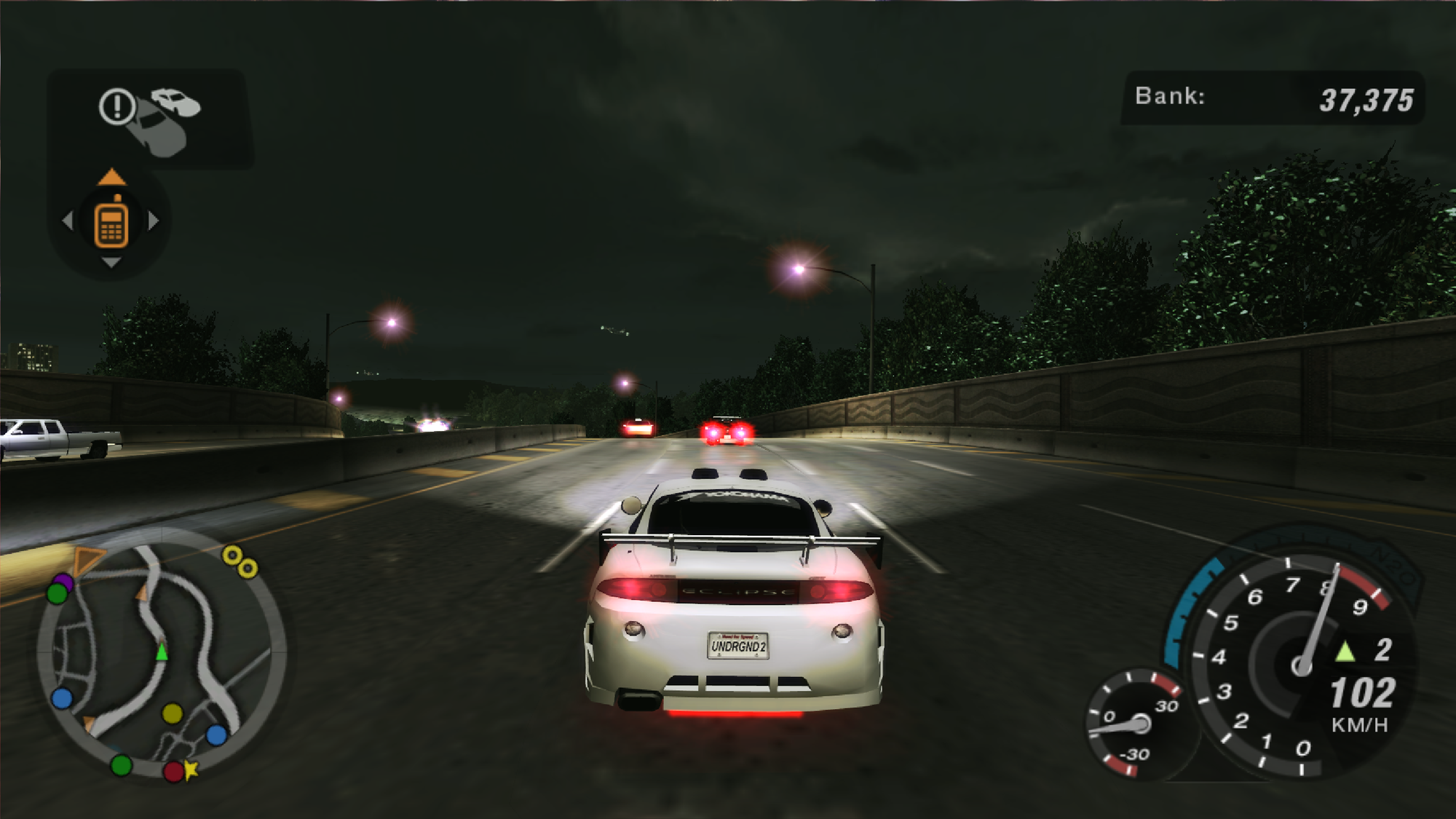
That’s in theory – but how these races work in practice is you expertly time accepting the race with spinning the NPC car, so the race ends after five seconds.
It’s free real estate. And fun either way.
You can also thunder around the highway which rings the main part of the city and wait for the NPC car to hit a van and then win that way too. Which is somehow even more fun, because sharp corners are for other people.
But beware – if your opponent isn’t making mistakes or you don’t spin them, it can be almost impossible to lose them on the turns of the Jackson Heights or the rail yards of Coal Harbour – so it’s often best to just return them to the highway where you can wait for your opponent to clip a station wagon – and it’s still fun.
When you win enough Outrun races, you are then rewarded with cool unique components – thus incentivising you to engage with the system – so whilst it is optional, it feels a lot closer to the core of the game.
It’s not all praise, however. There is an “interesting” (read: annoying) quirk, however, which ties into the game’s progression system – each “phase” of the game has up to three possible unique unlocks. If you don’t complete the event to unlock the component during that phase, you miss out. The game doesn’t tell you this, either.
Fortunately, I cottoned onto this before I missed out on any of the game’s very chunky performance upgrades, but the gripes don’t end when you unlock the parts.
With the original Underground, you had a single car – when you swapped your car, all your parts went with it – including unique components. This meant trading your car in was seamless and you were encouraged to upgrade often.
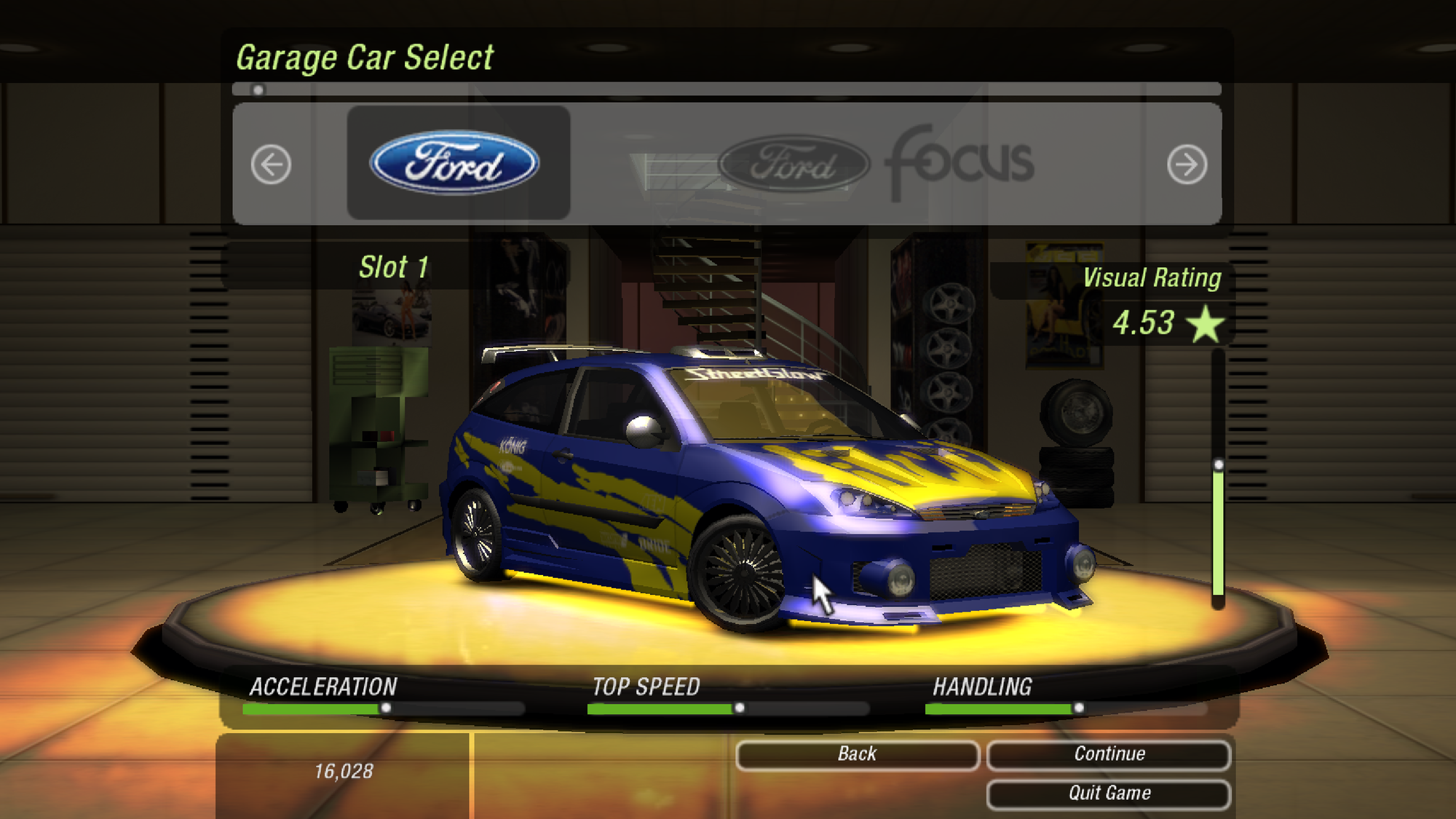
In the place of this system, you can now own multiple vehicles - but they don’t share parts. This creates a few problems that are not present in the original title, which do count against Underground 2.
Firstly, unlocking a unique car part is now a one-shot deal. I hope you liked the car you put the unique component on, because you can’t put it anywhere else.
Secondly, when you get a new car, you must then pay to take it from stock to hideous street monstrosity in one huge chunk. This is quite expensive, as the cost of components has increased from the first title to the second. This creates feel bad scenarios where you empty your wallet on a new car only to find it doesn’t feel right, or it doesn’t perform as well as your other car with the unique performance components installed.
What this means is that despite the game giving you more options, and more garage places, the best way to play the game is to pick a car and stick with it for the entire game – which is counterintuitive to the point of creating a garage system with room for several cars.
Indeed, I can recall playing this game as a youngster and being incredibly nervous about having no money, no way to upgrade my car and being too slow to complete in the game’s race events. Which never happened, but that shouldn’t be a feature of your cool street racing arcade game.
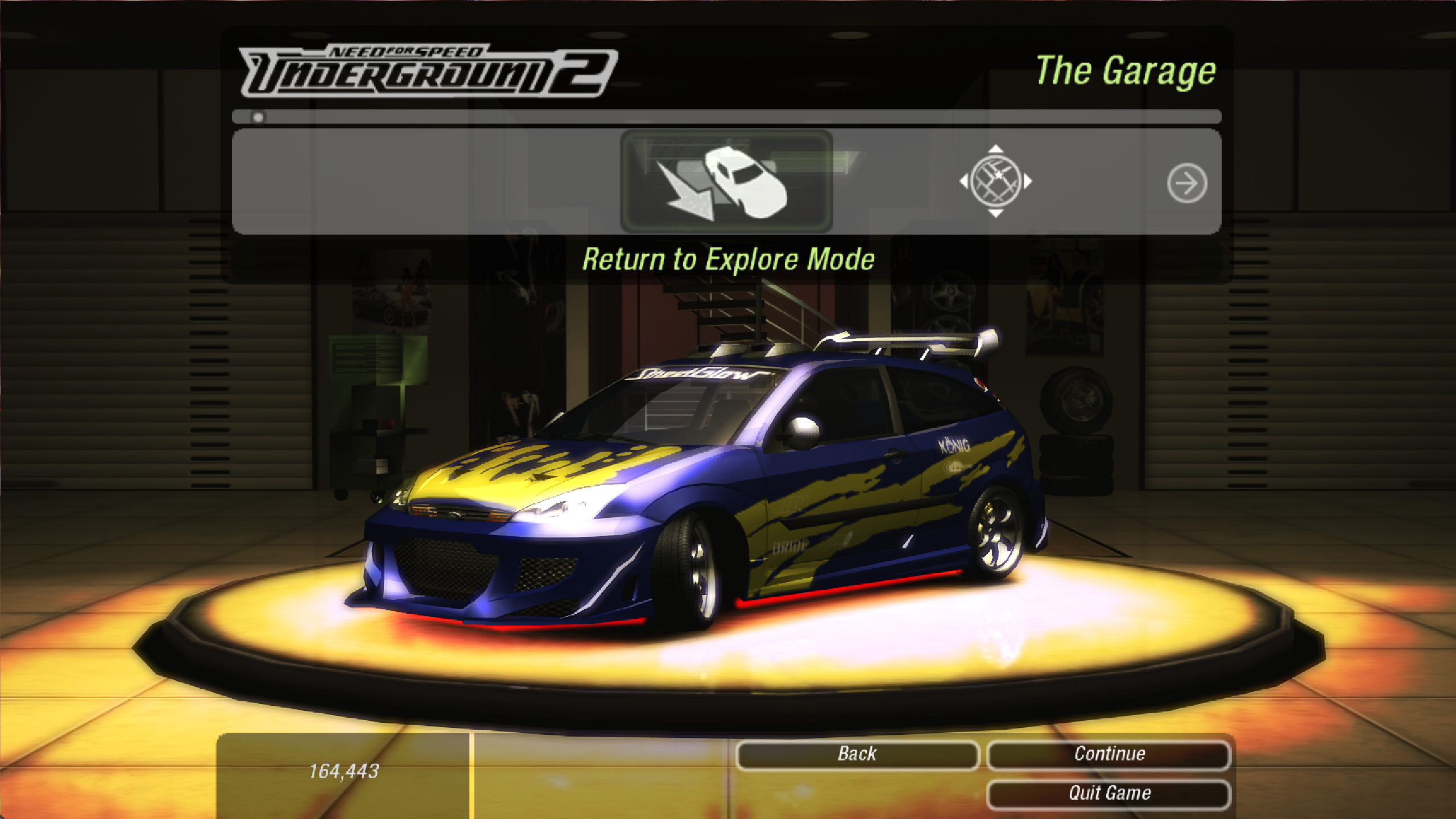
Which is a shame, because there are a ton of cool new visual components, bordering on unnecessary. There’s nitrous purge, hydraulics, trunk customisation, split hoods, spinners – and that’s just a taste. EA Black Box really goes all out in letting you turn your car into a weapon of mass distraction.
Now, that isn’t to say all of this is a dealbreaker, but in my mind it does count against the game.
But the gripes don’t stop there – let’s talk about the story.
We pick up where we “left off” in Olympic City – after defeating the (almost) nameless, faceless goon from the first game, another nameless, faceless goon you don’t care about, injures you and totals your car in a planned traffic accident.
With no car and no job, Samantha (whoever that is) sends you to Bayview (a parody of Hollywood, I guess?) to meet Rachel and carve out another living in the city’s street racing scene.
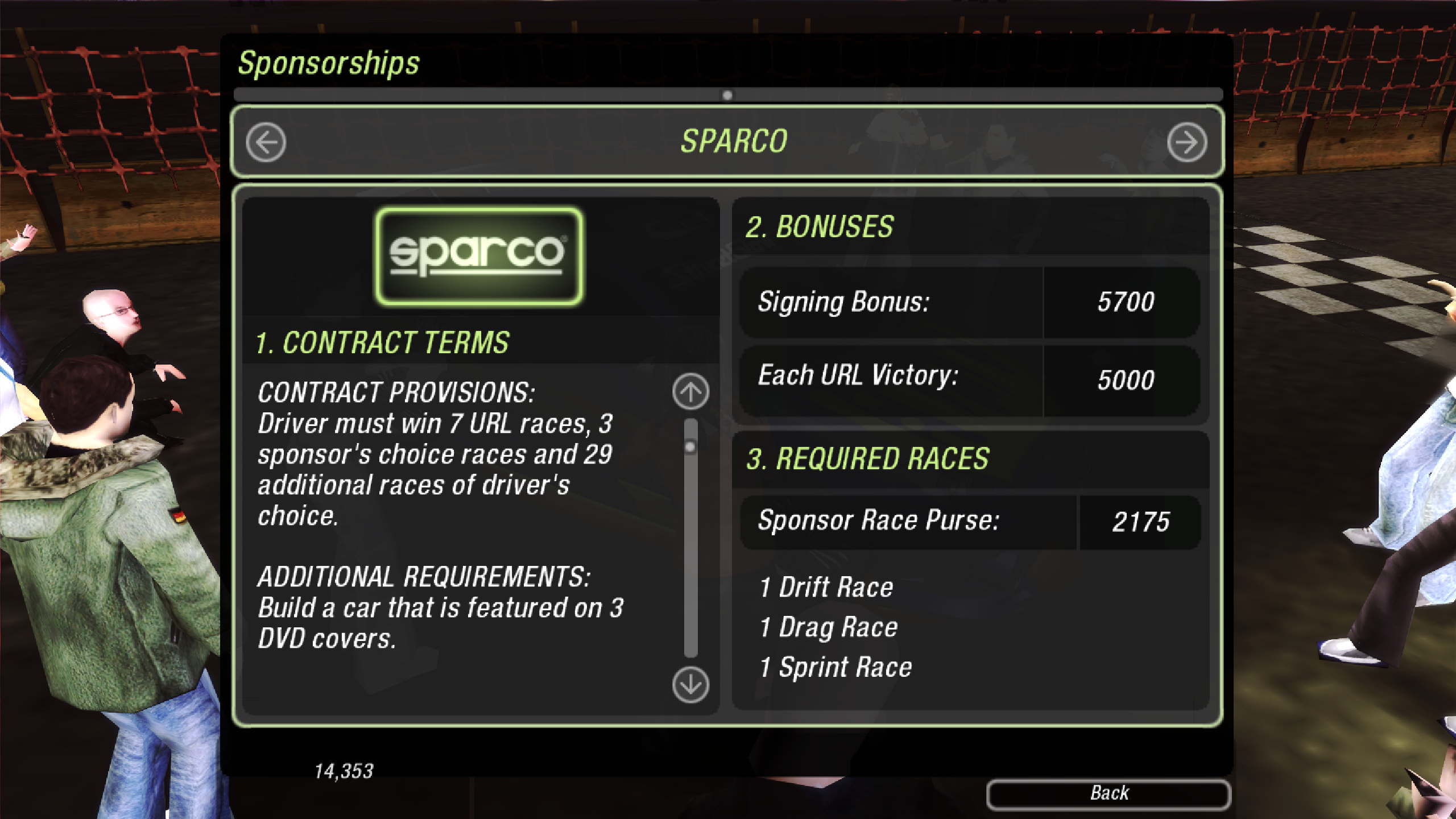
Rather than a ranking system, the player instead instead has to fulfil a sponsor contract for each phase of the game - these contracts represent real world automotive brands, so clearly someone made some money on the side.
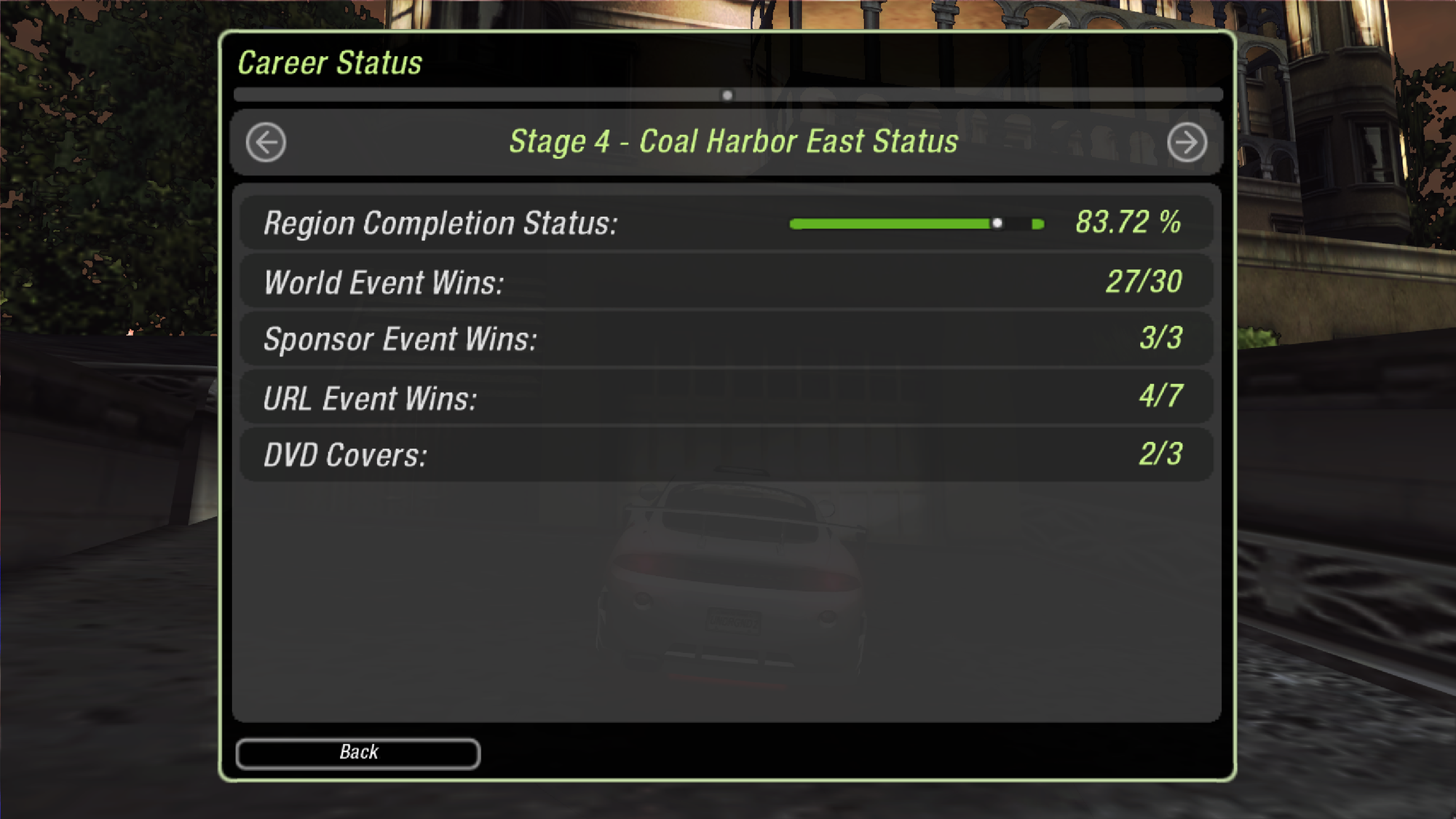
Each time you complete a sponsor's set of requirements, you progress to the next phase, unlocking more of the city, and another sponsorship opportunity.
The story is told to the player through a series of Max Payne style comic strips, which appear at the start of U.R.L events.
It’s clear that some clever clog journalist marked Underground down for weak story chops, and either the publishers or developers got gun shy about the depth of their framing narrative devices and resolved to try harder.
The result is a straightforward, flavourless story about money and conspiracy in motorsport, and the player ruining the villain’s carefully laid plan to take over the street racing scene.
I am harping on this a bit, because if this was an intentional choice it works. It’s an arcade racing game. The setting only needs to work as a framing device about you racing your cool car. But I cannot shake the feeling the developers or publishers were petrified about being given a black eye by capricious journalists and felt that they had to work harder.
Either that, or EA thought Underground 2’s gameplay wouldn’t carry the title.
The great news for EA Black Box, and EA, is that the gameplay absolutely does carry the title – the gameplay loop of race, unlock parts, race again is still here – but with additional race modes, cosmetic components, and the same slick race physics that defined Underground. Race, unlock parts, drive to the relevant store, buy them, complete a time trial for a magazine cover, take a custom photo of your hideous monstrosity, race again.
Bayview oozes atmosphere, too. There’s been tremendous care and craft put into building the game world - the dirty train yards of Coal Harbor, Beacon Hill’s gentle slopes, and the bright lights of the Casino in the city square.
Just writing about it makes me want to Underground 2 again. What a powerful feeling.
Underground 2 does drag when you’re deep in the fourth and fifth sponsor phases. You’ve collected all the cosmetic parts, your car’s performance has been maxed out, and there are no more hidden shops to find. But the game still wants you to complete another fifteen events – most of the time these will be Underground Racing League (“U.R.L”) events, too – which are multi-stage events consisting of two or more races.
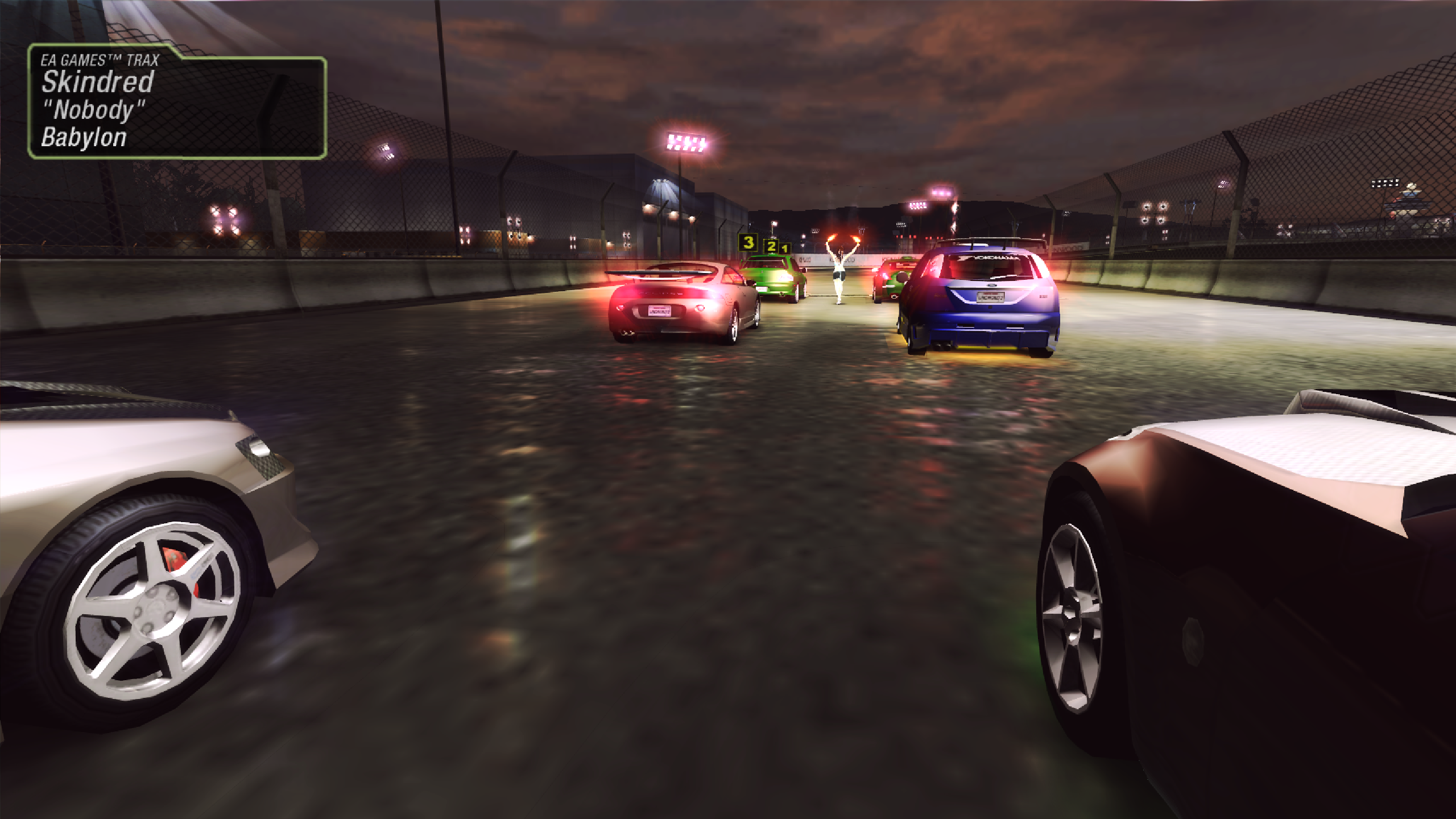
Because the Universal Resource Locator (ha!) events are the way you experience the game’s setting, this also creates significant gaps between story beats. It’s very easy to forget who anyone is, what you’re doing, or why. Which wouldn’t be a problem if it was just a framing device, but as we’ve established, the developer doesn’t think it is, and that’s a problem.
Your reward for grinding through the last handful of events is a five-lap showdown with Caleb – whoever that is – and the game ends unceremoniously.
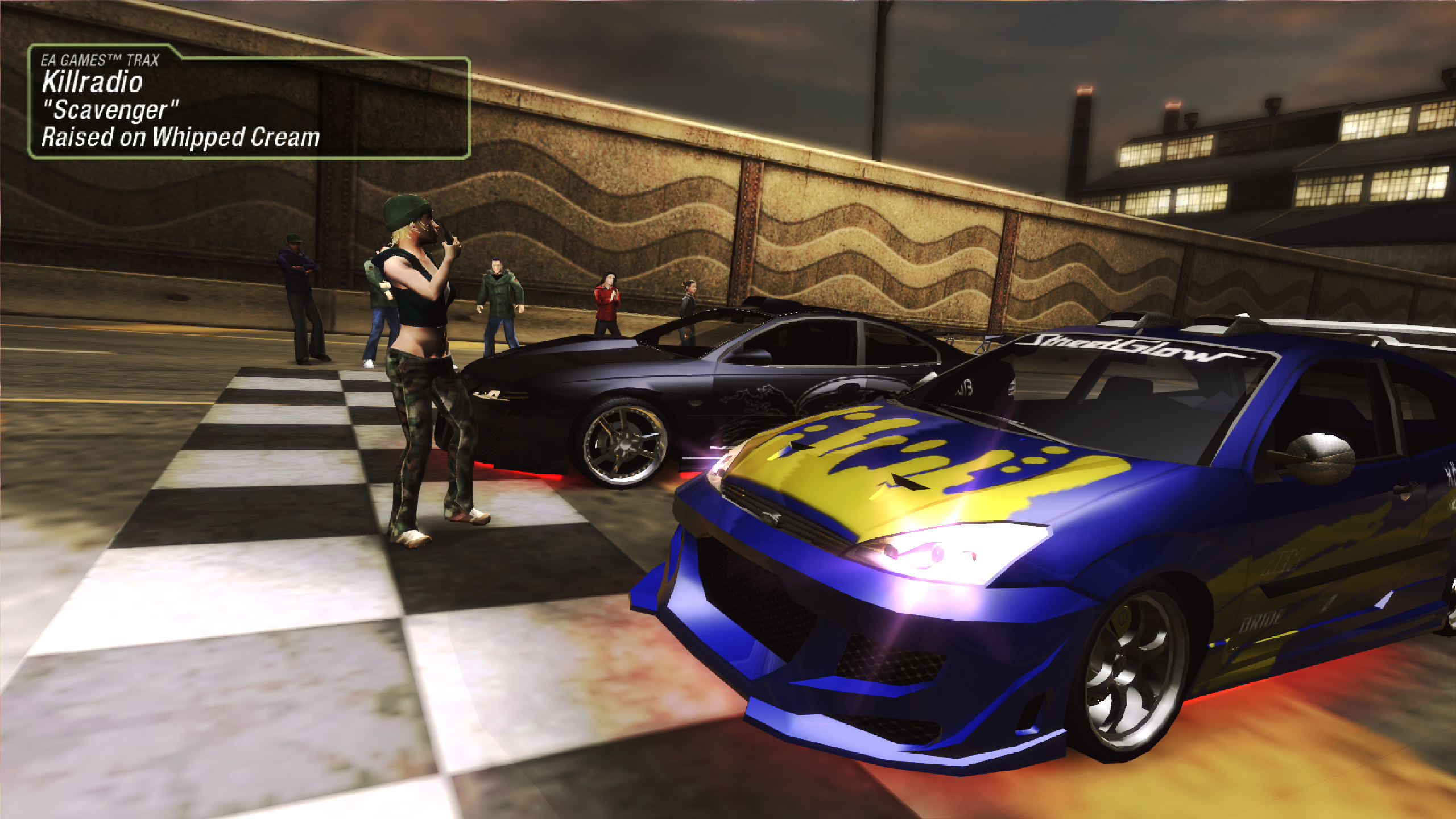
I think Underground 2, much like Underground, is a title where the journey is far more satisfying than the outcome. You’re the motorsports version of Alexander the Great, weeping that there are no more tacky upgrades to unlock.
But along the way, you just had the best time.
And that’s good enough for me.
Catch you next time,
Vulkan
Critical Information Summary
Review Platform: PC
Developer: EA Black Box
Publisher: Electronic Arts
Cost (At Time of Publish): Varies - Second hand market only.
Did you like this article? Did you hate it? Go over and keep the discussion going on the official Vulkan's Corner facebook page! - whilst you're at it, leave a like!