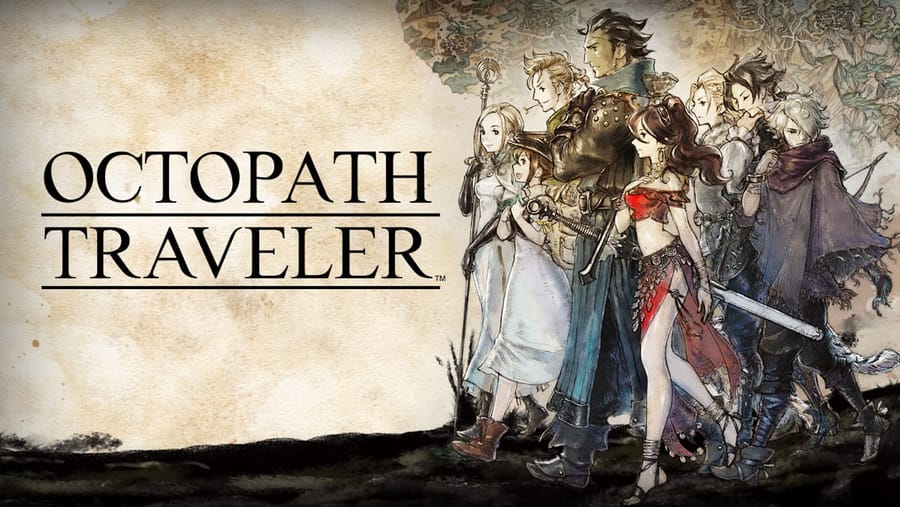
What is a JRPG? A miserable pile of mechanics!
This is technically my wife's fault. She had a hot tip about Nintendo putting on a Christmas sale with Steam levels of generosity. I picked up the sequel to Mario + Rabbids: Kingdom Battle.
But there was also a bundle that caught my eye - a two pack featuring the first two Octopath Traveler games.
They were dirt cheap, I liked the look of the promo shots, and I remember seeing my gaming messiah, Jim "Stephanie" Sterling talking about his love for them. When I still played Yugioh, they were recommended to me as well.
So despite having Salamanders to paint, I decided to split my time between Octopath Traveler and hobby time. After sixty hours, I needed to come to a decision about the game's quality for my blog - and still managed to finish 2000 points of Salamanders for ANZAC Cup.
Now, I know what you're going to say, dear reader, I didn't need to publish a review. But if a game's not featured on my blog, I haven't played it.
That's the rule.
This review is about a JRPG and will contain spoilers. If you need to immediately know if this game is good or bad, Octopath Traveller is absolutely a fantastic title, and worthy of your attention.
It is an RPG, though - and those who want non-stop, wall-crawling action, should avoid it for the same reasons they avoid every RPG or JRPG. Which is that it is slow, story rich, and has turn-based combat, which deprives their tiny brain of dopamine.
If you cannot handle a game which doesn't feature action every second you play it, I've got you covered - play Boltgun.
For everyone else, keep reading. Or don't, I'm not a cop.
Octopath Traveller takes place in the fictional high fantasy realm of Orsterra - although that's not mission critical information. The world different biomes with uncreative names, with four settlements each, in a web of sorts, with lower-level towns closer to the middle, and end-game areas toward the outskirts of the map. It's notable in how not notable it is - by and large, it's pretty set dressing, but for reasons I will explain, I'm not down on it for that.
No. Instead the game asks you to care about eight individual journeys, following eight noteworthy individuals - to be an "Octopath Traveler", if you will.
There's a lot of variance in the quality of these stories - some are well written, deep and confronting. Others are shallow a-typical JRPG side stories of little consequence.
As an example, Primrose the Dancer's tale about vengeance, and the personal cost to fulfill her dreams of killing those who murdered her father. It's a banger pretty much all the way through, asking questions not just of Primrose, but of the player.
The same is true for Olberic's story. A proud knight serving liege and kingdom, who found himself without a purpose when he was betrayed. His king was killed and he was left without a kingdom, or a purpose - a lesson on reinventing yourself.
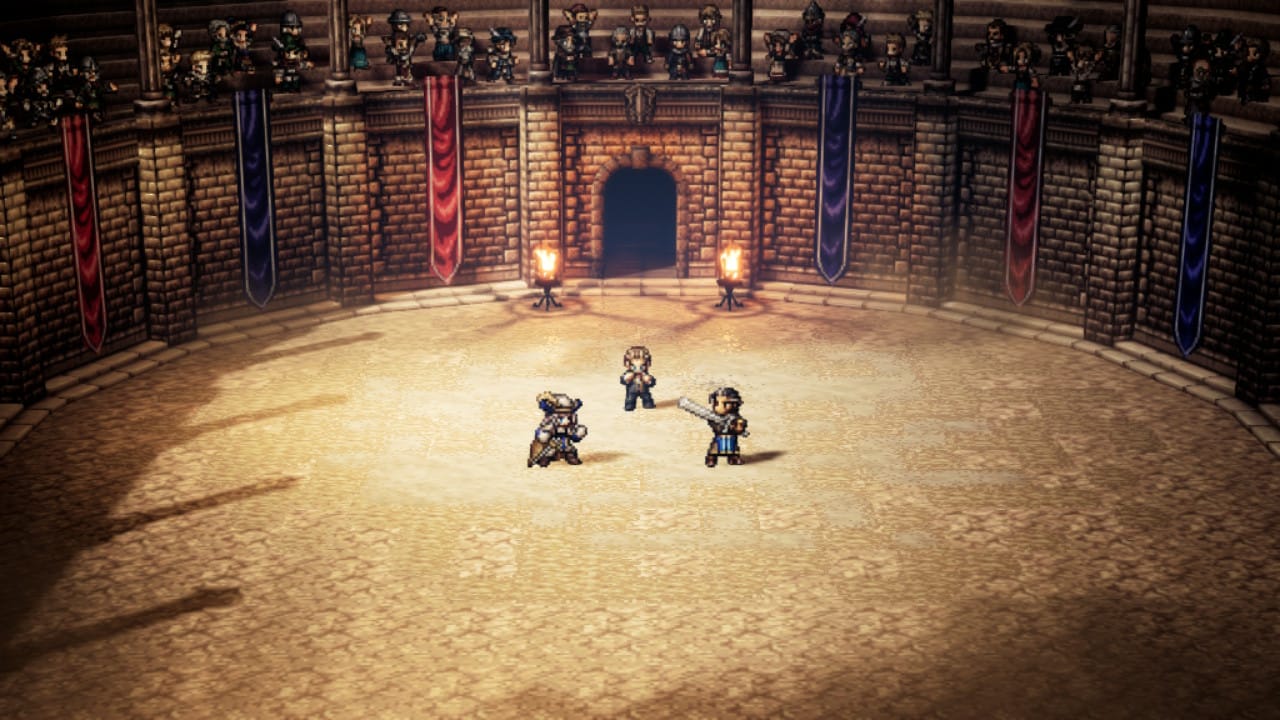
But by contrast, there's Tressa, who just wants to be a wandering merchant and the story never really gets deeper than that.
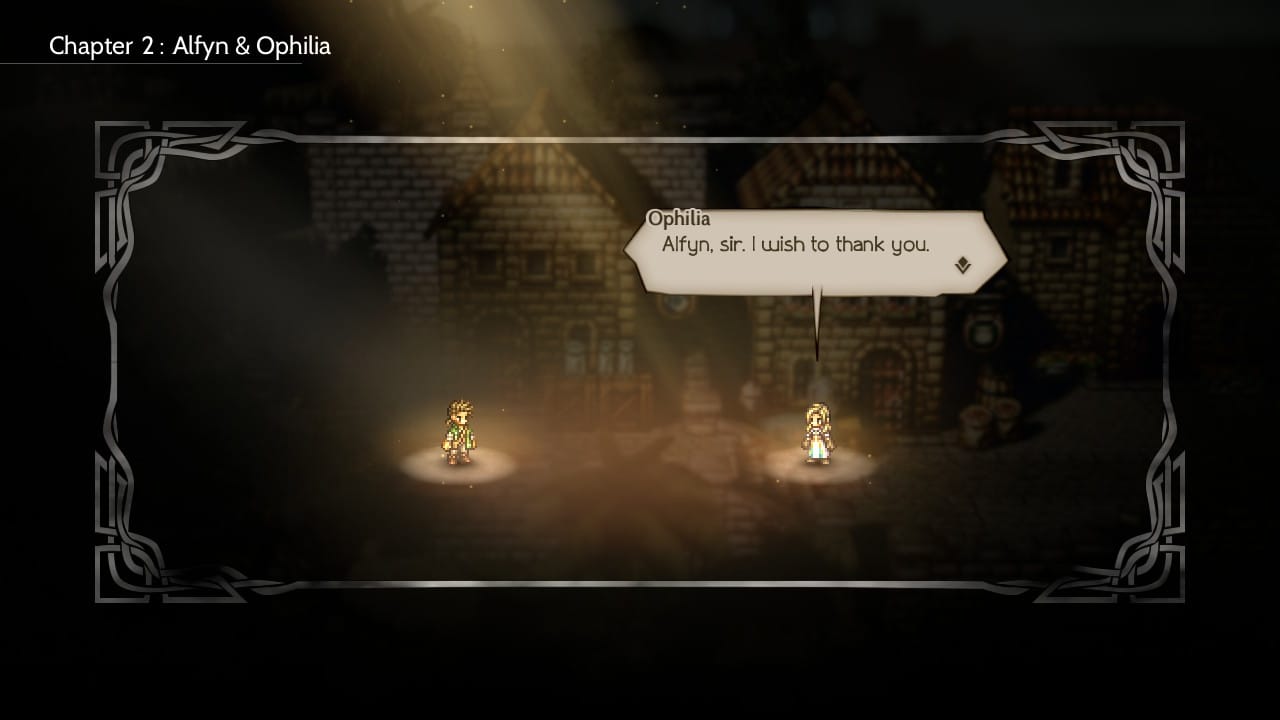
I can say that most stories have something to offer - and there are absolutely some stories that don't start well and become compelling as you move through them - Alfyn the Apothecary's story, about the ethics of caring for those who hurt others is a perfect example of this.
Something that does give me whiplash is that the first chapter of each traveler's story is based around just them. So if you have picked up more party members over the course of your travels, they just kind of aren't there until a fight starts, and then they pop in.
This is also true of later story chapters where the character appears to participate alone, but every combat encounter begins with three of their mates joining in, and then pissing off once the violence ends.
This is less of a problem in later chapters, and it's clear the designers thought about the dissonance that would cause. Whilst playing through a character's chapter, there is a mechanic called "travel banter", which features dialogue between the character in the story, and the other party members.
This accomplishes two goals.
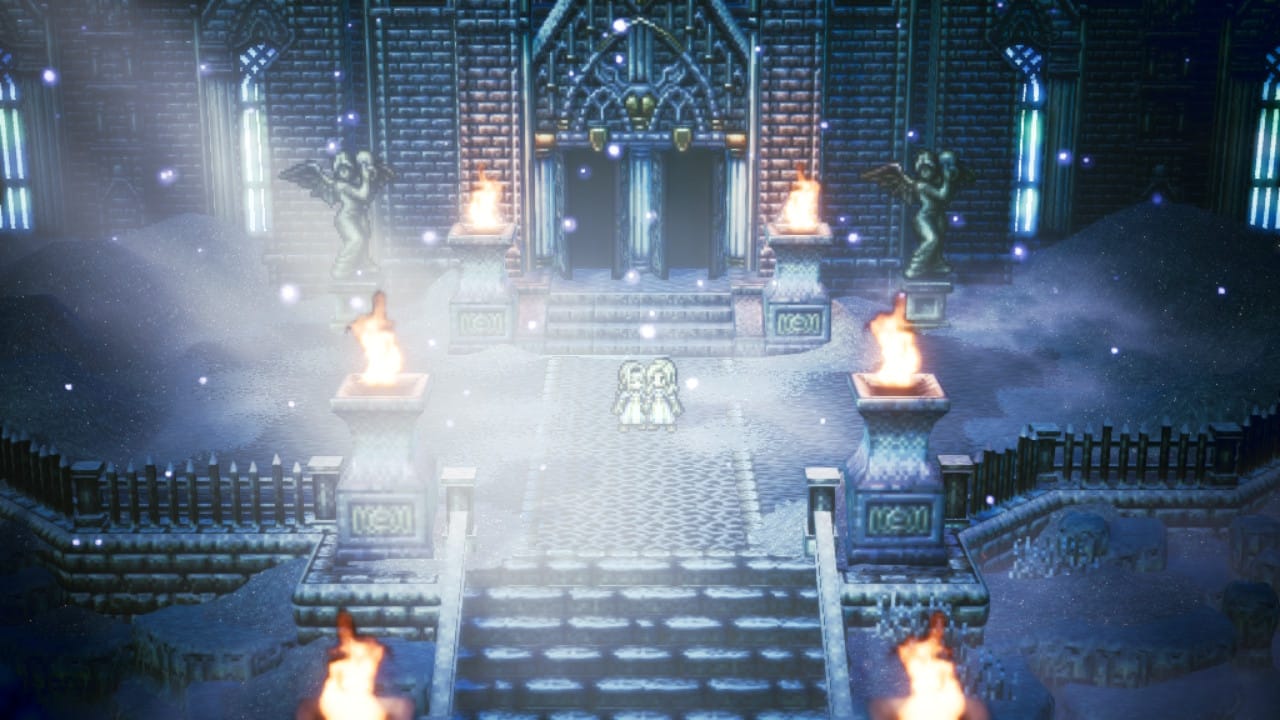
Firstly, it encourages you to think of the party as a party, rather than four strangers who don't know anything about each other. Secondly, it fleshes out each character's backstory, giving you more of a handle on the personality and temperament of each of the characters in your party.
Therion the Thief is paranoid, distrustful, and wholly sure in his abilities. He has a number of interesting discussions with Ophelia the Cleric, who sees the best in everyone - even when that leads to people taking advantage of her for their own gain.
As your party members are confronted with moments of personal growth or reckoning, those themes are then reinforced through travel banter - further immersing you in the trials and tribulations of each character.
It's not all doom, gloom, and hard conversations, though. Some dialogue is bright and fun - like Tressa the Merchant wanting to pet H'aanit's the Hunter's animal companion.
There's also some easter egg conversations and add a spot of fun - I'll let you find most of them for yourself, but there's a great one when you add all the women to your party.
It's not perfect, mind you - it is limited to those in your party, so the four characters who aren't in your party may as well not exist - which is a shame.
To finish Octopath Traveler, you just need to play through the four chapters of your protagonist - the character you initially started with. Each character has four chapters, and structured in such a way that you are encouraged to play through a chunk of each character's story at a time.
This is fine, but creates the risk of a disjointed experience of each character's story - but the developers foresaw this.
When you finish a character's chapter, you receive a summary of events, which highlights the important details. Then, when you start the next chapter of a character's story, you get a recap of the events of the previous chapter.
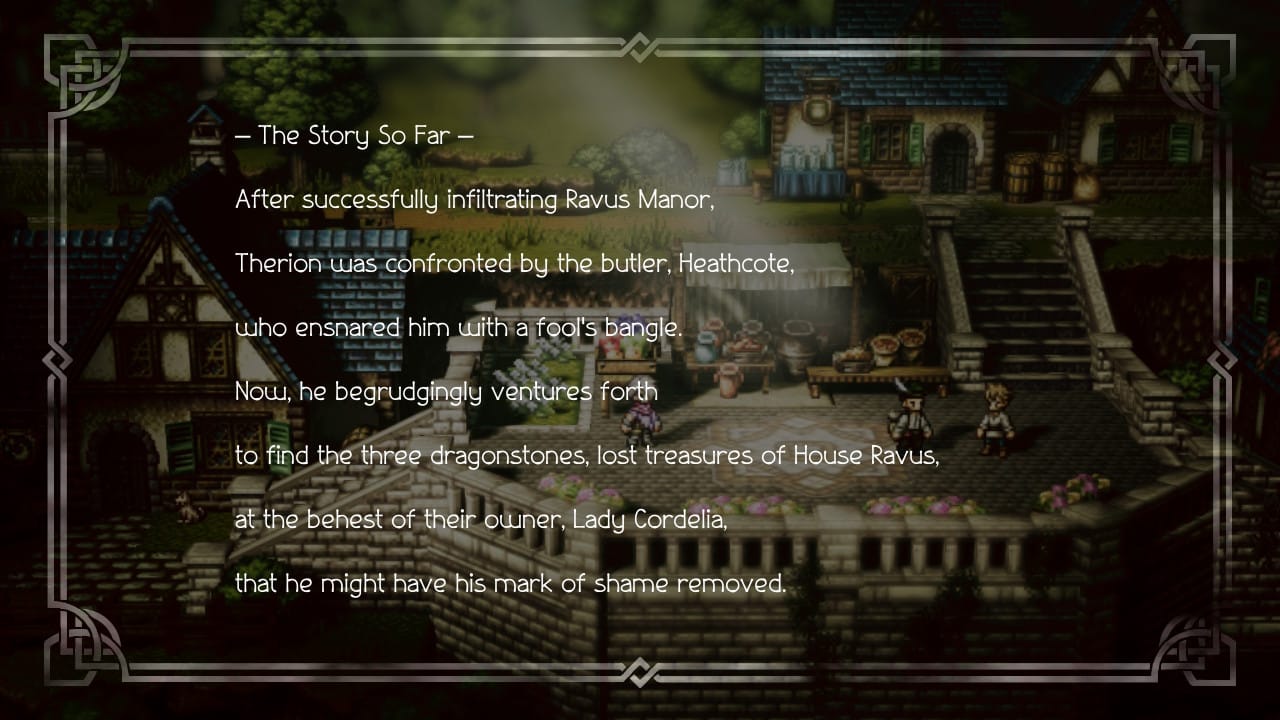
You are reminded constantly of where you are, what you did, are doing, and why. For an RPG that takes forty hours to complete, this matters - and it matters a lot. This small creative decision goes a long way to making all of the stories feel connected, and memorable.
I'm sure I don't have to explain to you the importance of keeping the player informed of what's at stake. But if you don't understand why this is important, I'll guarantee Octopath Traveler is not the game for you.
When you put all of these elements together, Octopath Traveler is only behind triple-a gold standard of Persona 5 Royal - and streets ahead of Final Fantasy V and Golden Sun.
Both of which are happy to let you forget all about what you're doing and why, to the point that you get lost and have no idea how to move forward.
What makes the storytelling really stand out is that the game's focus never changes. Yes, there are supporting characters, and side-quests, which provide framing for the world. But Octopath Traveler is always about its core eight characters. There's never scope creep that causes the game to feel totally divorced from the original subject matter - and the experience is enhanced as a result.
Even compared to P5R, there's no grand central narrative running through the heart of the game which ties the characters together, and places Orsterra in mortal peril. I marked the game down for that initially, but in hindsight, that means the thing that really matters - the journey of each character - stays front and centre.
(Spoiler-y Editorial Note: At least, not in the game's primary stories...)
Octopath Traveler does what it says on the tin - eight characters, on eight paths through the world. You are an observer in those stories, and they are never lessened. It deserves credit for having faith in its original vision, and not immediately reaching for the "there was a big bad waiting for us at the end of the rainbow" and making everything that came before it totally meaningless.
Looking at you, Chrono Trigger.
If you're reading this and thinking "hot damn, this guy has it in for all the other JRPGs he's played" - please know that's not true. But it is important to understand that video games don't get developed in a vacuum. Games take inspiration from their forebears, and rivals in the space, and that's part of the fun.
To that end, Octopath Traveler definitely takes some cues from its ancestors, like Golden Sun and Final Fantasy V and VI - but uses the extra fifteen years of industry experience to expand on those prototypical ideas.
It's not hard to see the inspiration provided by Golden Sun (not The Lost Age, piss off) and both Final Fantasy games that use the job system.
To be clear, Octopath Traveler is not a copy of any of those games - but I would suggest to you it is better than all of them. Not just for the execution of its stories, but also the depth of its combat systems.
The game does start slow - each of the eight characters is a different class. An Octopath of classes, if you will. A class has a combination of weapons it uses and unique skills. This isn't wild, off-the-wall stuff yet, although the break system (more on that later) means the weapons a character wields does matter.
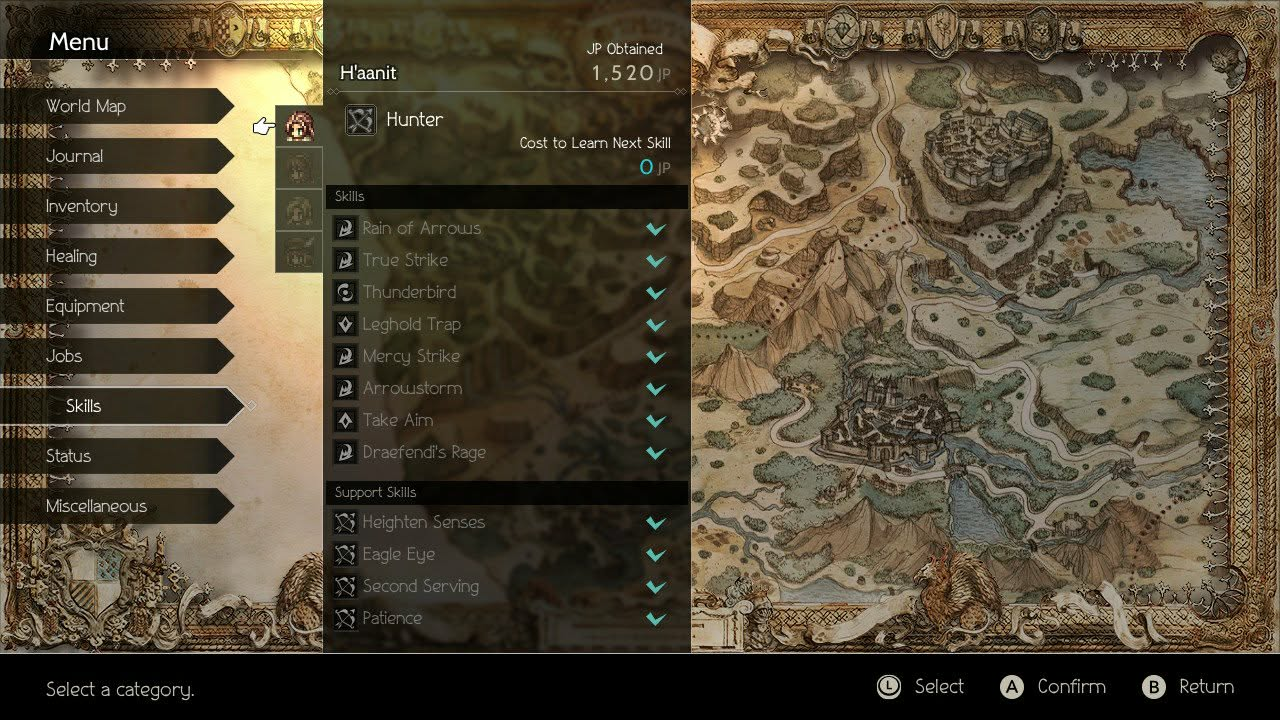
In almost identical fashion to Final Fantasy, you receive job points ("JP") which you can use to purchase additional skills. Then, after you buy enough combat skills, you unlock support skills, which are passive buffs that can be equipped.
Now there's a little more here, but you don't get it straight away - but I want you to carry in your mind that the limitation of the system is that each character has a certain class that cannot be changed.
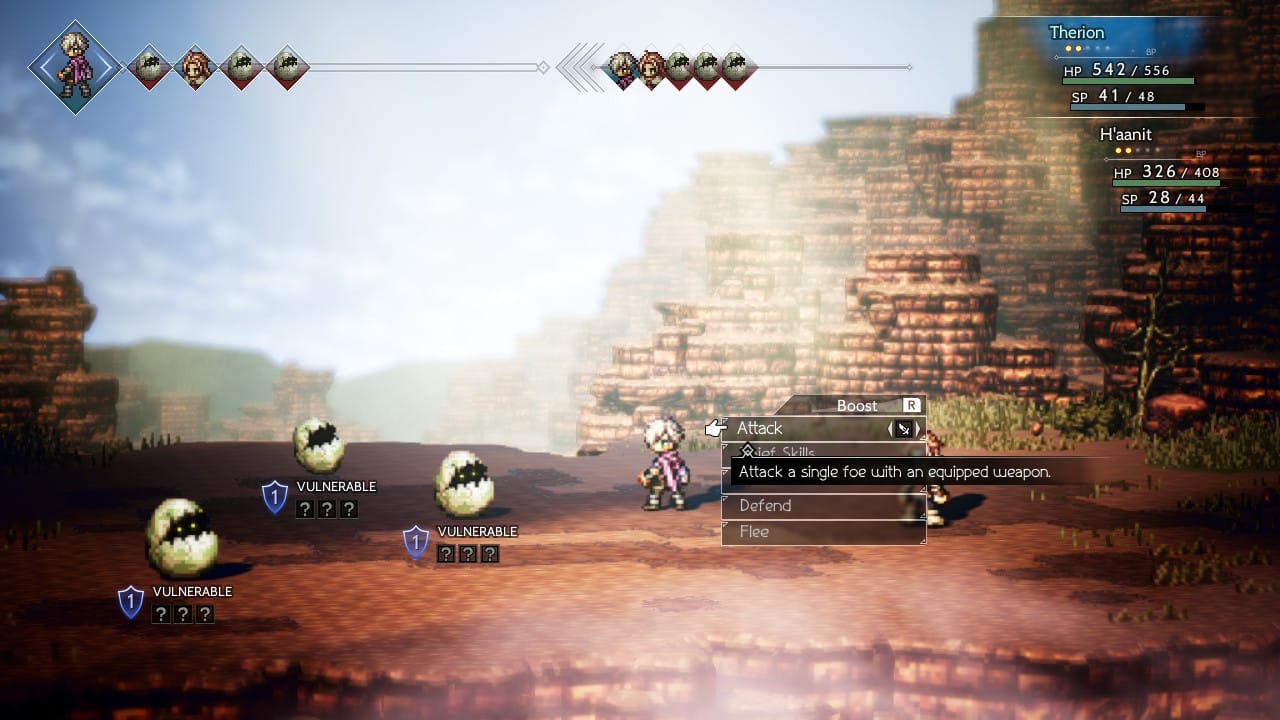
So what does all of this look like in a combat encounter?
The first unique point of difference is Octopath Traveler's "Break" system. Put simply, every enemy in the game has a shield, which reduces incoming damage of all types. Seems, rough, right?
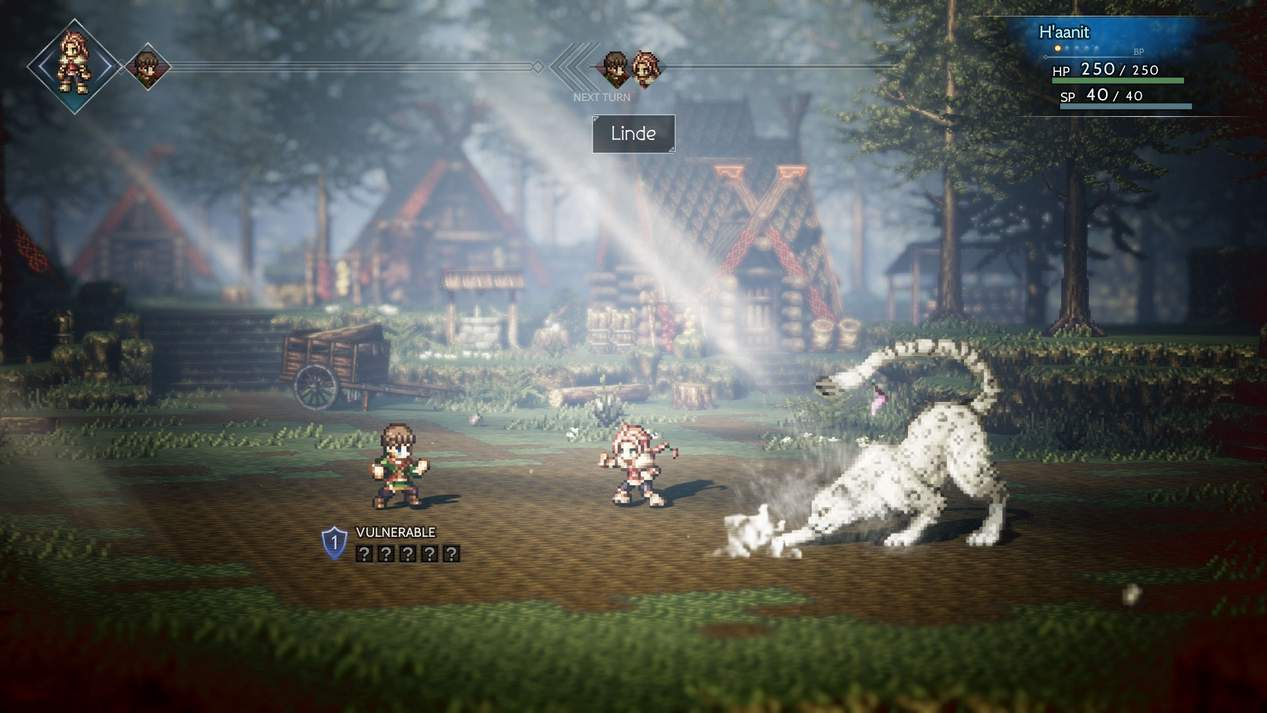
Well, no. Because each enemy has a number of weaknesses. When a foe takes damage they're vulnerable to, they lose a shield point. If you have a way to strike a weakness multiple times (such as Therion's "SP Steal", which hits an opponent twice with a dagger), they will lose that many shield points.
When an opponent's shield points drop to zero, they "Break". They become stunned, and take full damage from all abilities. They do act first the turn after they are stunned, so it is impossible to lock an enemy out of fighting.
This creates a unique combat flow that challenges you to pick your moment to press your advantage. It also solves the late-game problem of every combat encounter feeling like a nail for you to hammer in. No two encounters are the same, and encounters where every enemy has the same weakness is uncommon.
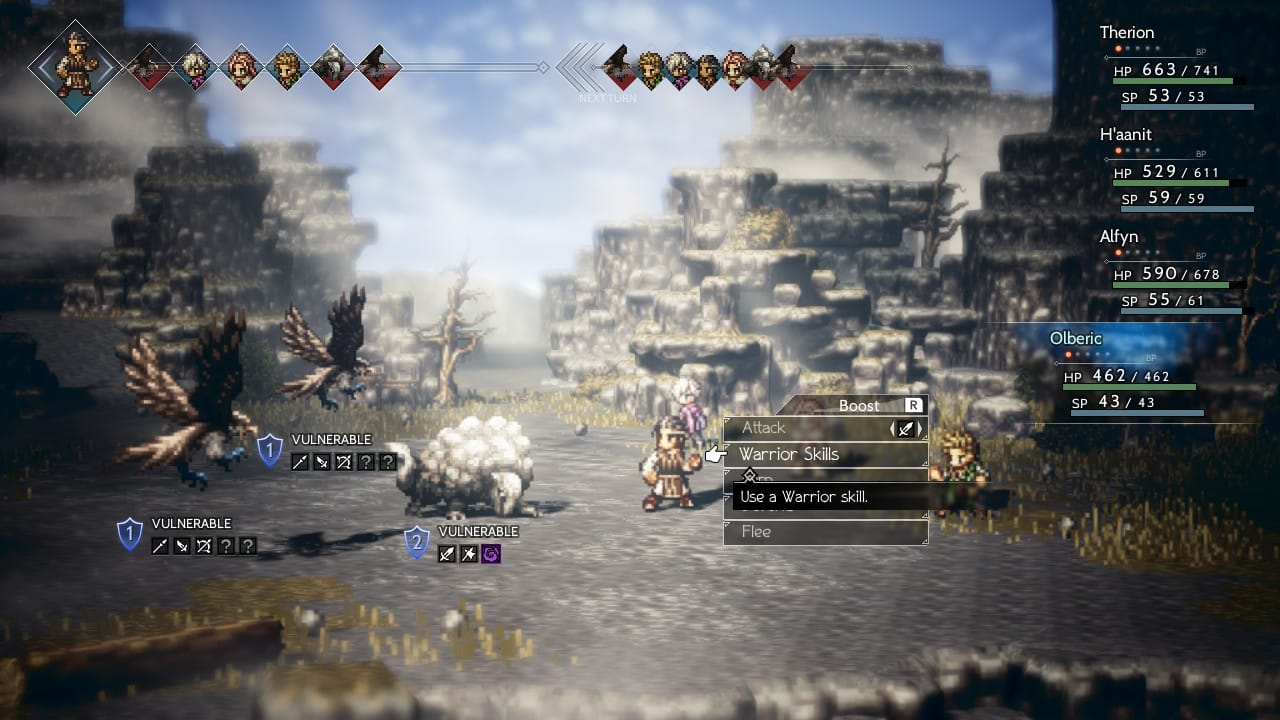
Yes, you can absolutely build a party which is able to hit multiple vectors and clear an encounter in two or three moves, but you have to think about how you go about doing that. Which means, like Golden Sun, it is incredibly satisfying to tinker until you find a party combination that works for you.
The system particularly sparkles and shines in boss fights, where you need to know when to try and hit the boss hard - and when to slack off, chip away at shield points, before building up for another series of big hits.
But that's not all.
All characters receive a secondary resource called boost points, or BP. Each character receives a single boost point at the start of every turn.
You can spend these in several interesting ways. You can make a buff or debuff last longer, increase a skill's power, or perform extra attacks with a weapon.
That function is pretty important in boss encounters, even at higher levels - why? Because each boss has something I call a "break check":
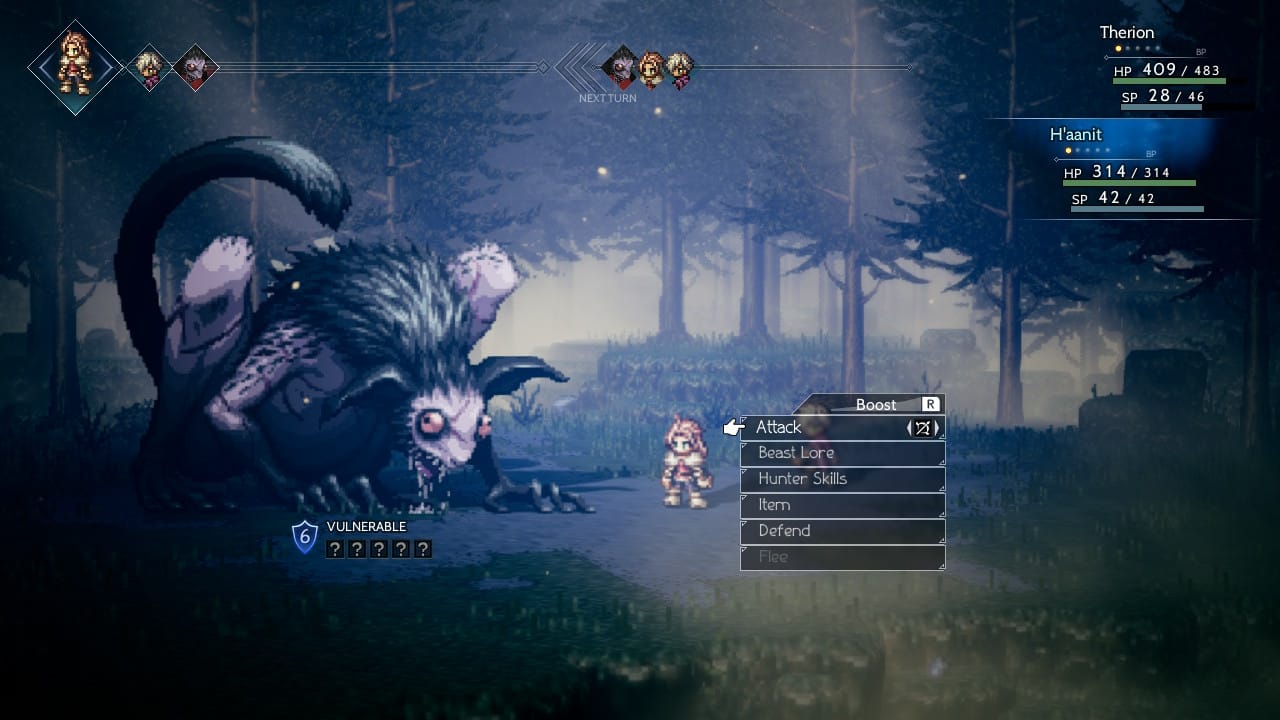
How these work, is that a boss will perform a unique action, with an accompanying line of dialogue. This is your warning that party will be hit by an ability that will do massive damage if you don't stun the boss.
This forces the player to make a decision. Do you let your party take monstrous damage to preserve your resources for a better opportunity? Or do you preserve the party's strength, but limit your ability to push through damage by spending all of your boost points.
When you get into the game, and all of these systems combine together, it creates a deep and engaging combat system. Much like Golden Sun, your ability to manage limited resources, and juggle party members and equipment is an ongoing challenge - particularly as you need to move characters around to play each story.
Then I got to a tavern, a place which allows you to change party members, and discovered that I couldn't replace my protagonist (I picked Therion the Thief). I was frustrated, because that meant that I was limited in my potential class combinations - they would all need to start with "Thief plus X".
At least, that was what I thought. But wait, there's more...
On a whim, whilst traversing a mid-level route between two settlements, I saw a unique icon on the map. Curious, I paid it a visit, and found myself in the "Shrine of the Huntress."
I was rewarded with the final piece of the puzzle - the "Hunter" job. And all my complaints about team composition melted away.
These work almost identically to Final Fantasy - when you visit a shrine, you unlock a class as a secondary skill. This means that you go from four characters with classes you can't do anything about, to four characters with four additional classes - once you unlock the additional jobs.
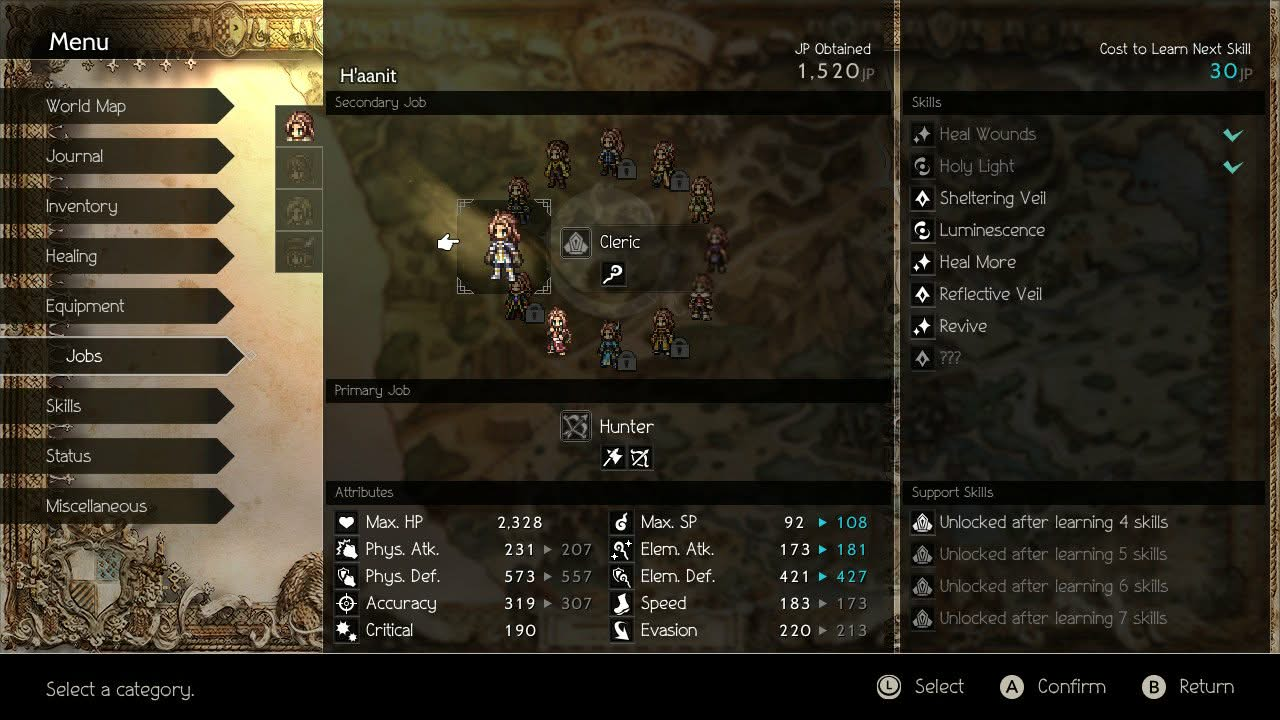
But it gets better - when you unlock a job and start unlocking that job's skills, you also get access to the support skills of that job. You then rotate jobs, to unlock more support skills. This means you can combine the most appropriate support skills of each class, to create support specialists, glass cannons, and tanks - however you feel.
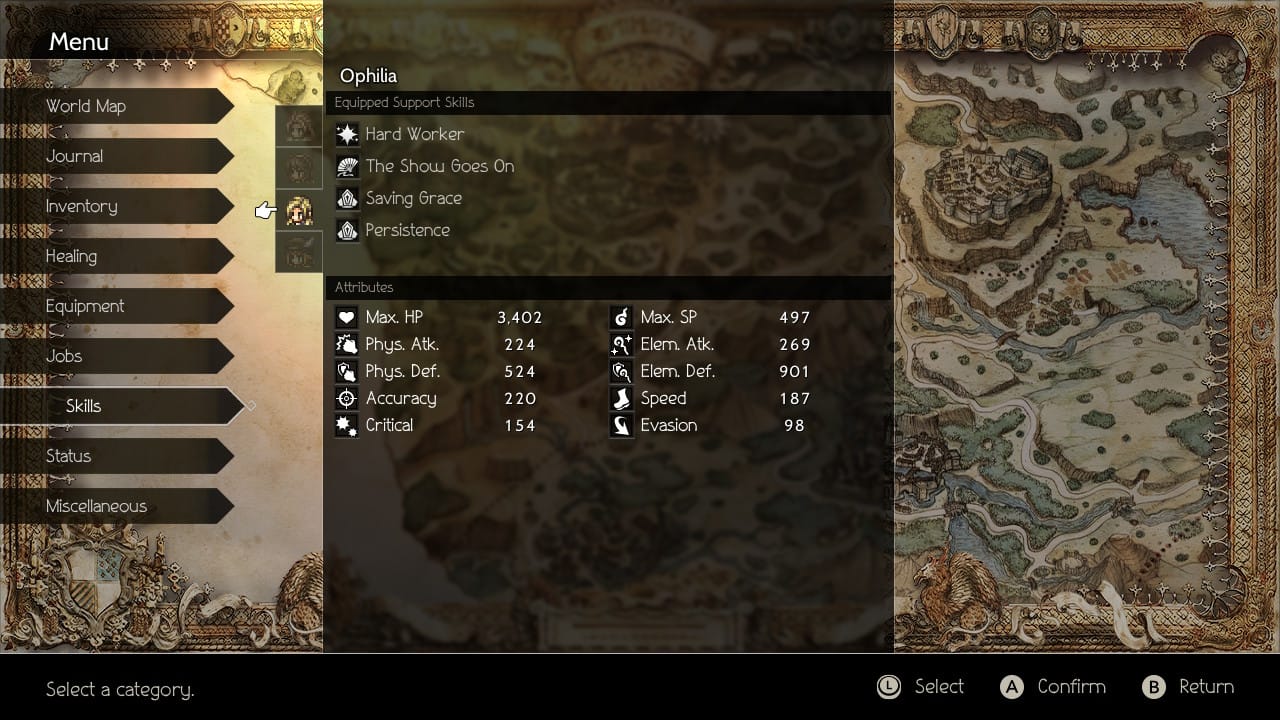
And if you thought all of these systems interlocked well before, this final piece of the puzzle turns the game into a moebius strip of depth. I cannot tell you how much fun I had mixing and matching. And that's without talking about the structure of the game asking you to constantly move characters around and innovate in order to play through any given chapter.
I don't wish to spoil, but you might also be able to unlock jobs that aren't one of the original eight classes, too - but you might have to work really hard to unlock those.
But on top of all of that, there is one last series of mechanics.
Each character has a "path action" - a way to interact with NPCs in the overworld. In the preview material, these actions are split between "Noble" and "Rogue"
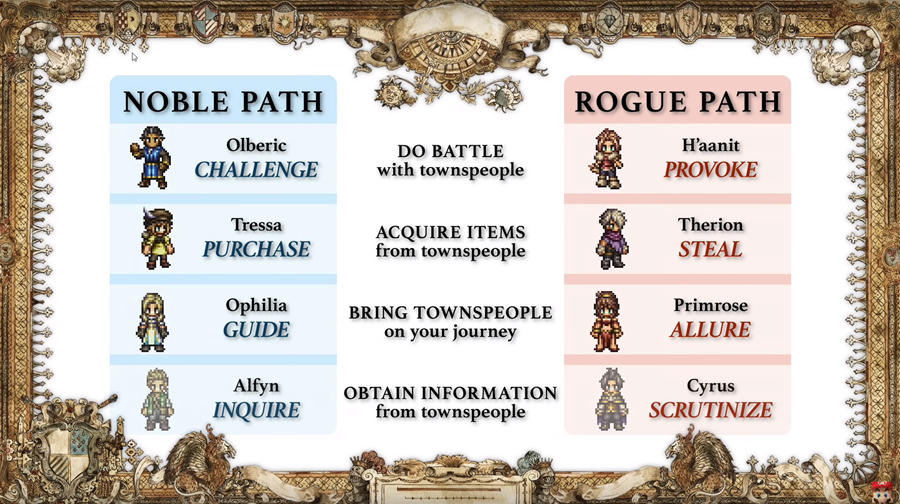
The difference isn't that significant - if you fail a rogue action five times, you will be unable to conduct additional path actions until you "restore your reputation" at a tavern for a fee.
This isn't game-determinative, although a character's story will often require them to complete a path action, or several path actions, which they won't be able to fail.
You can get through the entire game without completing path actions, but they are useful. Therion (and Tressa) can both turbo-charge the level of equipment you have access to by stealing and buying items from strangers, and both Alfyn and Cyrus have the ability to unlock small bonuses and hidden items by scrutinizing NPCs in towns.
It's clear there's been a lot of thought and care put into the backstories on NPC, making it a wonderful skill for worldbuilding, too.
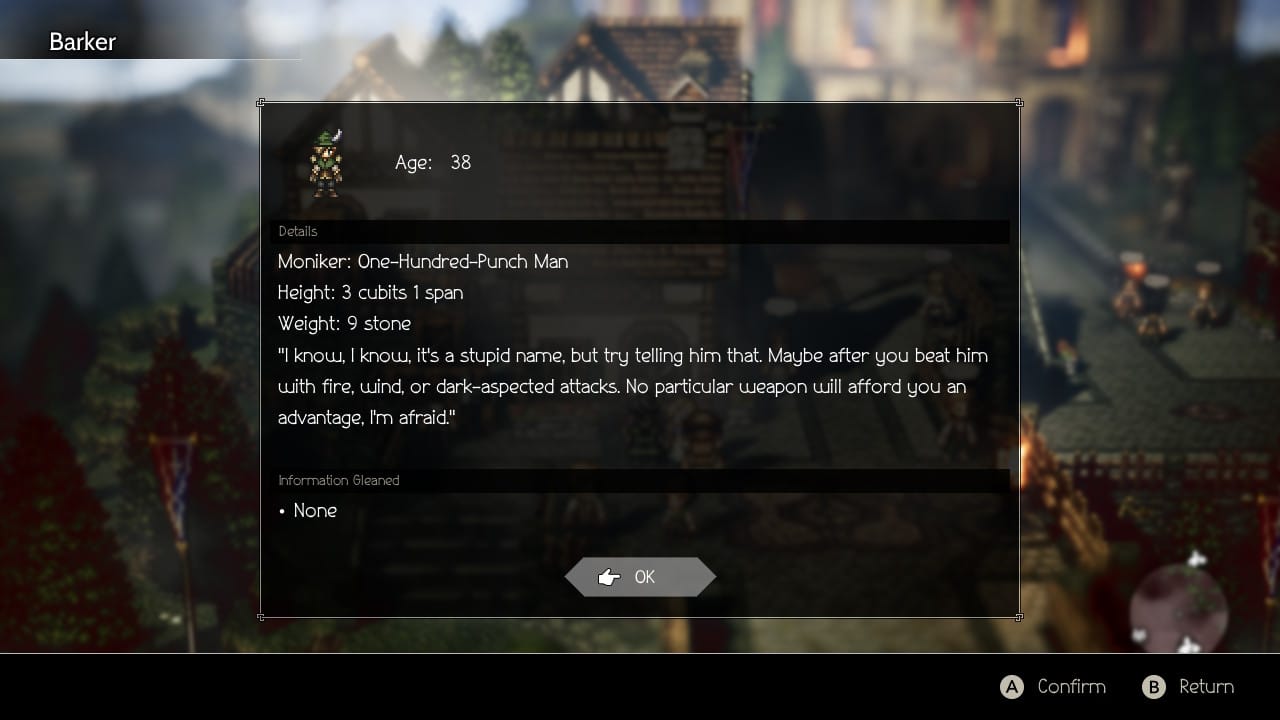
I found Ophilia and Primrose's path actions to be largely not worth using, because their class and job skills were a better use of action, and H'aanit's path action was difficult to use, because you have to use creatures you capture, where Olberic can just belt people - which is far easier.
Most side quests will also require you to use a path action, and provide multiple ways to resolve a side quest, depending on the path action(s) you use - some of the rewards are pretty sweet for the work you put in, too.
It's not enough to carry Octopath Traveler by itself, but it's a glossy cherry on top of an already delicious cake, and I'm here for that.
I talk a big game about the meta components of a game and their importance. The three pillars of game design (narrative, mechanical, audiovisual), and I'm also a big proponent of gameplay loops, particularly when they are mutually supportive.
I feel like Octopath Traveler is an example of both.
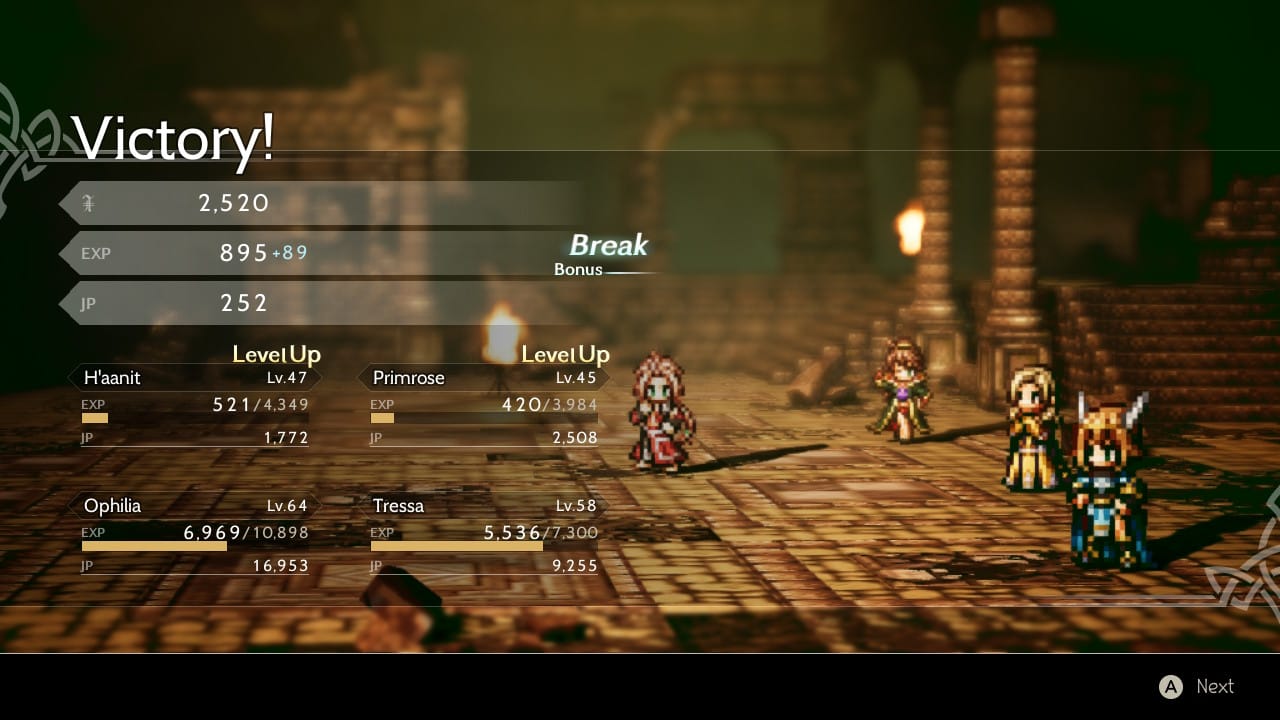
Exploring and battling makes you stronger. Then you invest the experience gained from combat into your party's skills, which allows them to do more, expanding your options. So you experiment, and you become excited to test your new party configuration - then you seek out the next chapter to test your mettle against a boss. And so it goes, until you finish the game.
But there's one last piece of the puzzle - the third pillar, if you will.
No game can stick the landing without immersing the player in the world and its characters. Story does some of the work for you, but the last thing you need is a distinct and engaging visual style.
Octopath Traveler claims it has a 16-bit visual style (the developer says it's "HD-2D", whatever that means). Which means pixel art. As a child of the 90s, I have a soft spot for pixel art, but I have come to realise that sometimes, the pixel art style is used as a crutch to hold up gaps in visual design.
You can determine the level of effort put into a pixel art style game by how far they stretch the medium. If you're not sure what I mean by this, have a look at Castlevania: Symphony of the Night, which does some amazing things when pixel art was still used by Triple-A games.
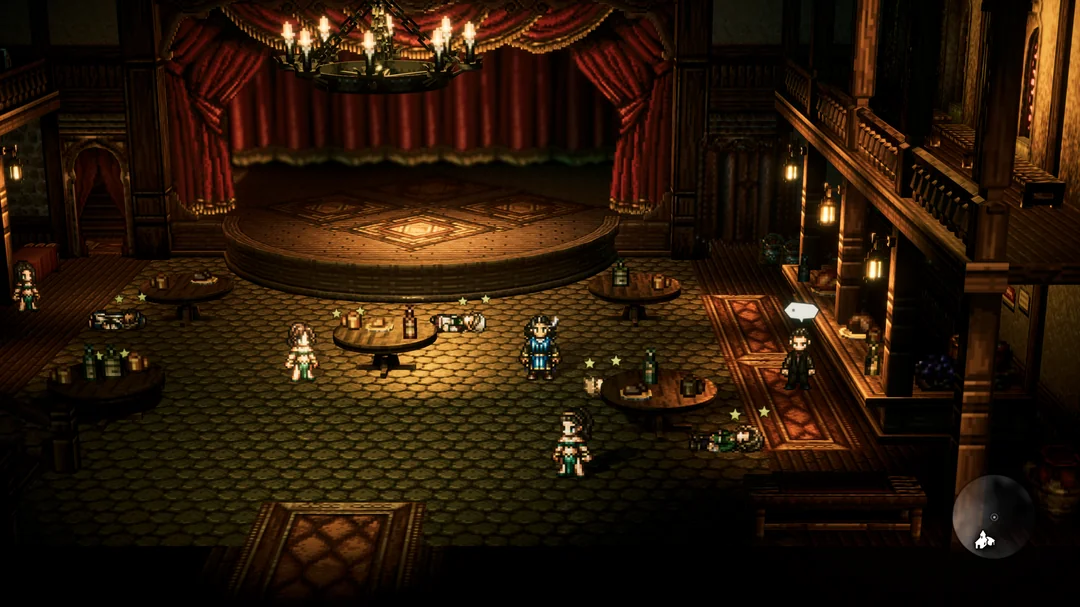
I am happy to report that Octopath Traveler looks stunning. All of the character sprites (except Olberic when you give him the merchant job) are brimming with colour and distinct detail. It's easy to tell characters, enemies, and NPCs in the overworld apart.
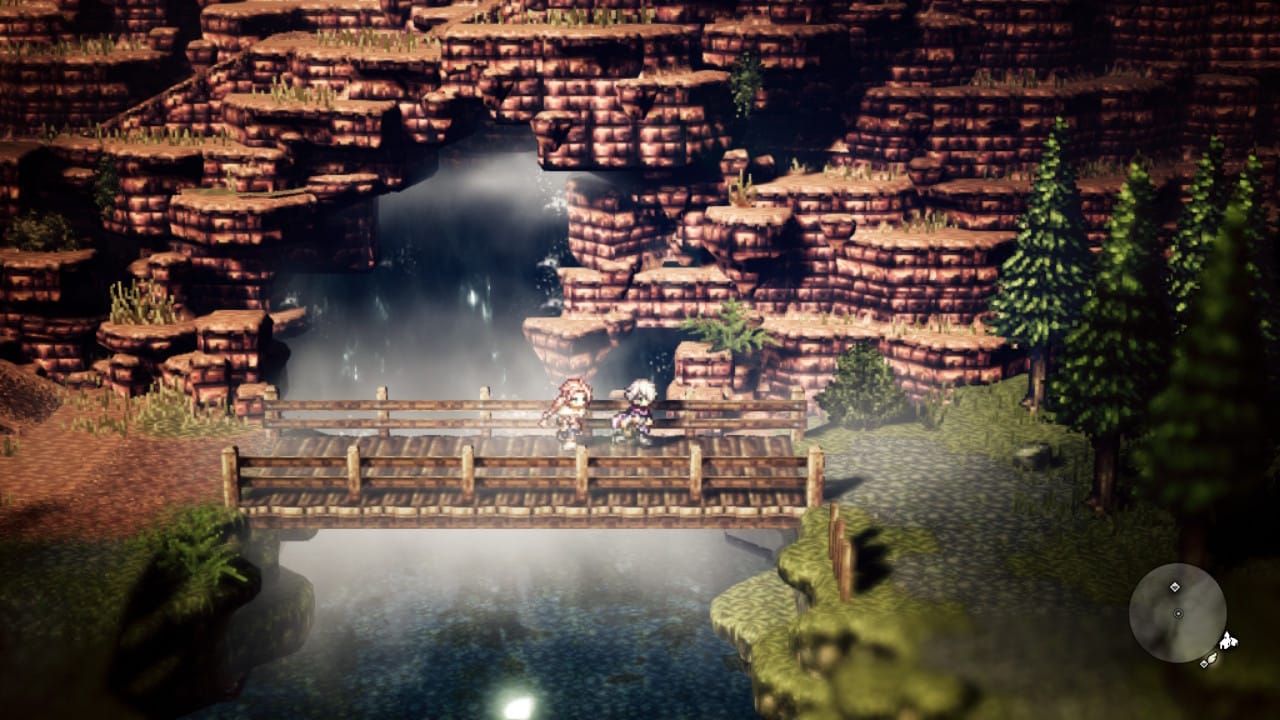
The environments are spectacular too - you'll traverse deserts, grasslands, frozen tundra - wherever you could see yourself, there will be a location in Octopath Traveler. Many locales feature stunning vistas, and the whole thing oozes colour and charm. It's a joy to behold.
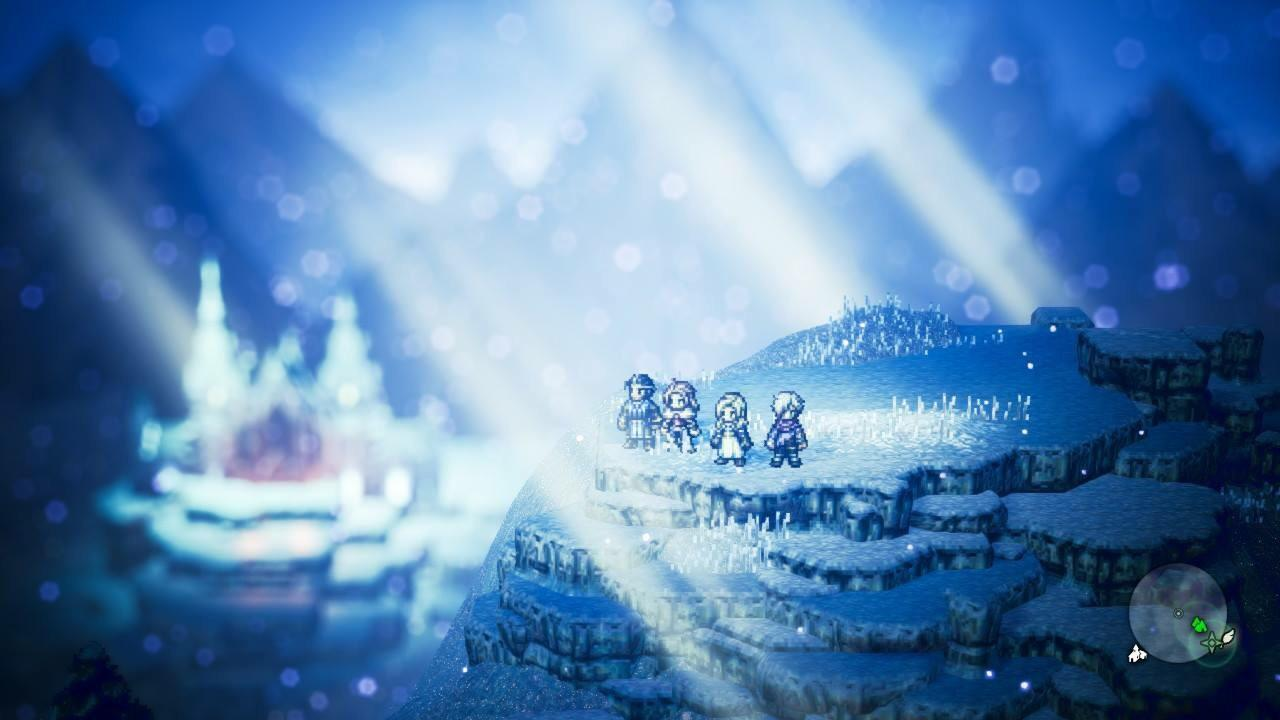
I've always considered myself a bit of a grasslands andy, so the game opting to have an entire grassland biome is my jam. Most RPGs abandon the grassland early on in the piece, leaving only the dull greys and angry reds of exotic locales like volcanoes and caves.
I also love the forest biome, which is always set to be at night, and features vivid dark blues and greens, and gives an enchanted, mystical vibe.
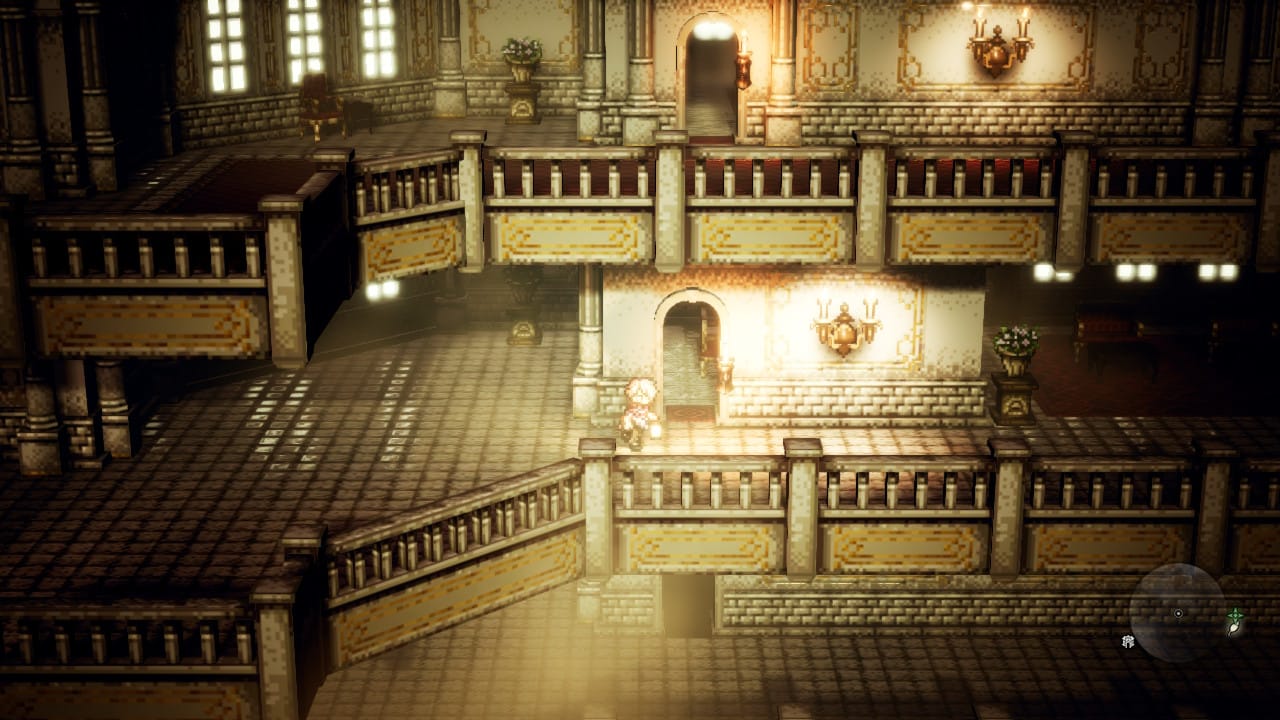
If there's one thing I will mark the game down for, however - it is that an awful lot of stories and important encounters take place in eerily similar looking mansions. You'll be seeing a lot of this tileset:
In combat, the animations for skills are clear and clean, and the feedback through sound and rumble when you break an enemy (or series of enemies) feels so good - even thirty hours in when you do it over, and over, and over again.
The user interface in combat deserves a special shout-out for giving the player a ton of useful information. At a glance you can see the current and next turn order, boost points available, enemy weaknesses, and the status of your party and foes. The menus are all smooth to move through, conveying information in a clear and concise way.
Sadly, I'm not an audiophile, so I will describe the battle music as "perfectly cromulent" - sorry, Octopath Traveler musicians.
So we've talked about the story, and the gameplay, and how the whole thing is packaged visually. If you've stuck around this far, then thanks for reading, Dad, one day I'll let you borrow my switch - but only once you finish your Black Templars.
Let me bring it home.
If you are still in the dark about my thoughts - let me spell it out for you.
Buy this game. Play this game. Love this game.
As someone who grew up playing RPGs like Pokemon, and has continued playing JRPGs to this day, Octopath Traveler represents a title that does nothing new, but artfully combines disparate elements from a host of different ancestors to produce a game with tremendous depth in its mechanics.
Then, it puts them into a gorgeous pixel art style world.
And finally, centres the game entirely around the Octopath Travelers, and convinces you that each one, except Tressa, is worth caring about. It does this telling a story in meaningful, memorable chunks. And it never loses faith in that vision carrying you through the game.
You will be engaged until you finish it - and then left wanting more. Hell, I want to go back and play it now - except I also bought Octopath Traveler II - so look forward to that.
Is Octopath Traveler perfect?
No.
But it's pretty bloody close, and deserves to take its place in the pantheon of perfect, and perfect-adjacent games - alongside P5R, XCOM 2, and Yakuza 0.
Hey, wait a minute.
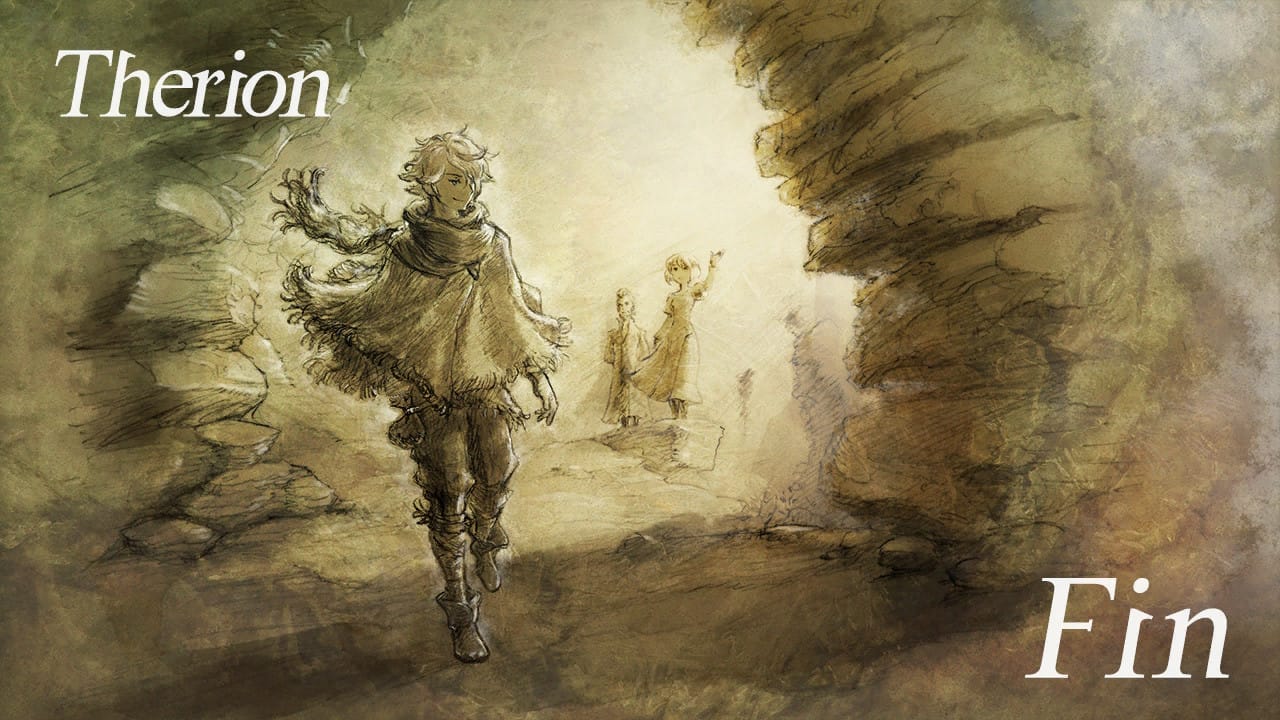
Catch you next time,
Vulkan
Critical Information Summary
Review Platform: Nintendo Switch
Developer: Square Enix Business Division 11, Acquire
Publisher: Square Enix
Cost (At Time of Publish): $110 (Switch 2 Price)
Did you like this article? Did you hate it? Go over and keep the discussion going on the official Vulkan's Corner facebook page! - whilst you're at it, leave a like!